

Commercial Venues
Retail video analytics from Argu covers malls, stadiums and big box stores, giving loss prevention and operations the same view of the floor in real time.
Retail video analytics from Argu covers malls, stadiums and big box stores, giving loss prevention and operations the same view of the floor in real time.
Explore real-world AI monitoring scenarios tailored to this industry.




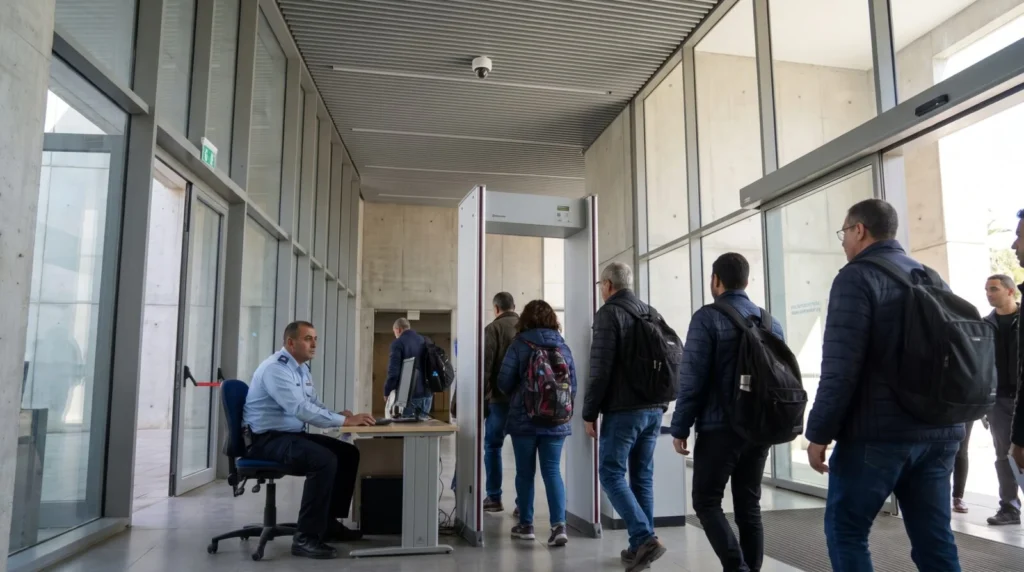


Retail loss prevention works best when concealment, the moment a person hides an item before reaching the exit, is treated as the event to catch, because a stock count only proves the loss already happened.
Most of what a stock count finds is old news: a physical or cycle count turns up a gap between what the system says should be on the shelf and what is actually there, and it is the only tool many stores have for connecting a theft or shoplifting loss back to a cause, weeks after the item left the building.
By the time that count runs, the person who took the item is gone, there is no clip tied to the gap and no timestamp to work from. A camera pointed at a shelf records the moment regardless, which is what accountants call shrinkage. Without a way to search that footage for the right moment, the recording is just hours of video nobody has time to watch, and the count stays the first place anyone finds out something is wrong.
The moment that matters is concealment, not the missing item on a shelf report. An item becomes a loss the instant it goes into a bag, a pocket or under a jacket, well before anyone walks past a sensor at the door. A system built to flag concealment behavior at the shelf gives a team a chance to intervene, or at minimum a timestamped clip to review, instead of a blank spot in a count three weeks later.
By the time a store camera captures that moment, the footage only has value if it can be found: a feed graded below 1080p often cannot resolve the hand to bag movement that separates a real concealment event from an innocent one.
External theft is the scenario most loss prevention programs are built around: a person with no relationship to the store removes merchandise without paying. It is also the easier case to describe to a system in plain language, because the scenario is a specific action in a specific zone, such as an item leaving a display case without a matching transaction.
Internal loss is harder to see because it often looks like a normal transaction. A staff member voids a sale after a friend has already left with the item, or rings a bundle of goods at a discount that was never approved. Catching this pattern usually means pairing point of sale data with what the camera actually shows at that register, at that minute, rather than watching the register feed all day on the chance something looks wrong.
Pairing point of sale data with camera footage at that exact register and minute works because both systems already sit under the same PCI DSS 4.0 security requirements for handling transaction data near a terminal.
The same cameras a loss prevention team relies on can answer questions an operations manager asks every day. How long is the line at checkout right now, a question tied to the same queueing theory most stores actually manage by feel. How many people are in the store compared to an hour ago. Which entrance is drawing the most traffic today. None of these are security questions in the traditional sense, they are staffing and layout questions that happen to run on the same video.
Occupancy caps enforced under NFPA 101 are set by a space's exit width and square footage, and a running camera count is what actually lets a floor manager act on that number in real time rather than finding out after the fact.
A venue's security team is very often also its operations team, or at least the team operations calls first when something happens on the floor. A slip and fall needs a timestamped clip fast, not a search through a week of footage. Building two separate camera systems, one for loss prevention and one for operations, duplicates the hardware and the review work for no real benefit when a single estate can answer both sets of questions.
Arenas, cinemas and malls carry a different risk profile than a single retail floor: crowd density, bottlenecks near exits, which is the same crowd safety concern regulators address through workplace safety standards, and altercations between patrons. Flagging a physical altercation as it starts, rather than after a complaint is filed, is the same concealment problem in reverse: the moment matters, and it is over before a person watching 16 monitors can react to it. Violence detection built to catch the first few seconds of contact works on the same principle: a fixed rule tuned to avoid false positives often has a false alarm rate high enough that operators start ignoring it, while a described scenario can be narrowed to the exact behavior a venue cares about.
| Method | What it flags | When you learn about it |
|---|---|---|
| Periodic stock count | A count variance against the system of record | At the next scheduled count |
| Point of sale exception reports | Refund and void patterns tied to a register | After the shift closes |
| Fixed rule video analytics | A pre defined class, such as motion in a restricted zone | Close to real time, only for the class it was built for |
| Plain language video agents | Any situation described in a sentence, including concealment before checkout | Close to real time, without a fixed rule set |
Most of the tools in that table are built around a fixed list of things to watch for, and the list is the ceiling. Argu takes a different approach: a loss prevention or operations manager describes the exact situation they want flagged, in plain English, and the system starts watching for it in about thirty seconds, on the cameras already installed. No dataset has to be collected first and no engineer has to write the rule. Argu's flagship product, Vision Agents, is built around that one idea: the operator who knows the store writes the scenario, including the one nobody sold as a pre built feature.
For a venue running loss prevention and operations off the same cameras, queue and occupancy monitoring and footfall counting sit next to concealment detection in the same interface rather than a separate system. Talk to Argu about a retail or venue deployment to see it against your own store layout.
Last updated: September 2026
Retail loss prevention is the set of practices a store or venue uses to reduce shrink, the gap between recorded inventory and what is actually on hand. It covers external theft, internal theft and process failures such as damaged or misplaced stock. Video, point of sale data and physical controls are the three tools most programs combine.
Shrink is the broader accounting term for any unexplained inventory loss, and theft is only one cause of it. Damage, spoilage, paperwork errors and vendor discrepancies also show up as shrink. A retailer usually needs several data sources to work out how much of a given shrink number is actually theft.
External theft is committed by someone with no relationship to the business, typically a shoplifter. Internal theft involves an employee, often using legitimate access such as a register or a stockroom key, to move goods out without a matching transaction. Internal cases are harder to catch because the activity looks like a normal part of the job until it is checked against other records.
A long queue is primarily a customer experience and staffing problem, but it also affects loss. Long lines put pressure on cashiers to move quickly, which can mean fewer checks on unusual transactions, and a crowded checkout area is harder to watch closely. Tracking queue length lets a manager open a register before the line becomes a problem on either front. The same camera count used for occupancy under NFPA 101 also feeds queue length, so a venue does not need a second sensor at the door to get both numbers.
Occupancy limits are set by local fire code based on the square footage and exits of a space, and enforcement usually depends on a manual headcount or an estimate. Camera based counting at entrances and exits gives a running total without a separate sensor, and the same feed can flag when a specific area, not just the whole venue, is getting crowded. Fire code occupancy limits are set under NFPA 101 based on a space's exit width and square footage, not a single fixed number that applies everywhere, so the camera count has to be checked against that space's own approved limit.
Yes, in jurisdictions with a biometric privacy law. Illinois BIPA, enacted in 2008, requires written consent before collecting a biometric identifier such as a face template and sets statutory damages of 1,000 dollars per negligent violation and 5,000 dollars per reckless or intentional one. A venue using facial matching for VIP recognition or loss prevention needs a consent and retention policy that accounts for the specific state law it operates under.
Camera footage itself typically falls outside PCI DSS scope, but a feed used to verify a transaction at a register sits next to systems that are in scope, and PCI DSS 4.0, in force since 2022, sets the security requirements for that adjacent point of sale environment. Keeping the video system on a separate, access controlled network from payment processing is the most common way venues keep the two from overlapping.
The best fit flags concealment at the shelf while staff can still act, and runs on cameras the store already owns. Argu AI covers concealment, queue length and occupancy on existing cameras, and a new Vision Agent can start watching a described pattern in about 30 seconds with no new dataset. Face matching falls under laws such as Illinois BIPA, so check consent rules before you switch it on.


By submitting this form, you agree to our Privacy Policy. Your data is encrypted.