
Home » Argu Products » Vision Agents / Chat with security cameras (Flagship Product
Vision Agents / Chat with security cameras (Flagship Product
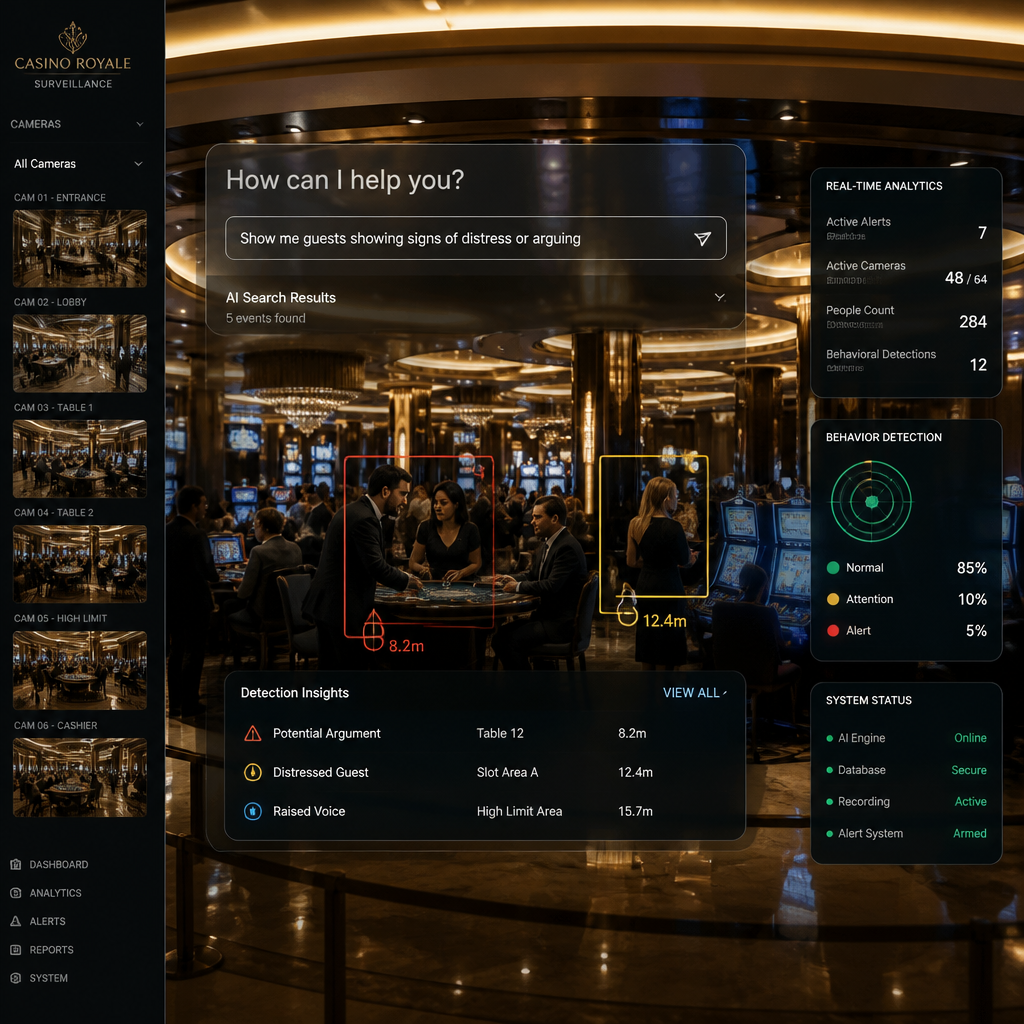
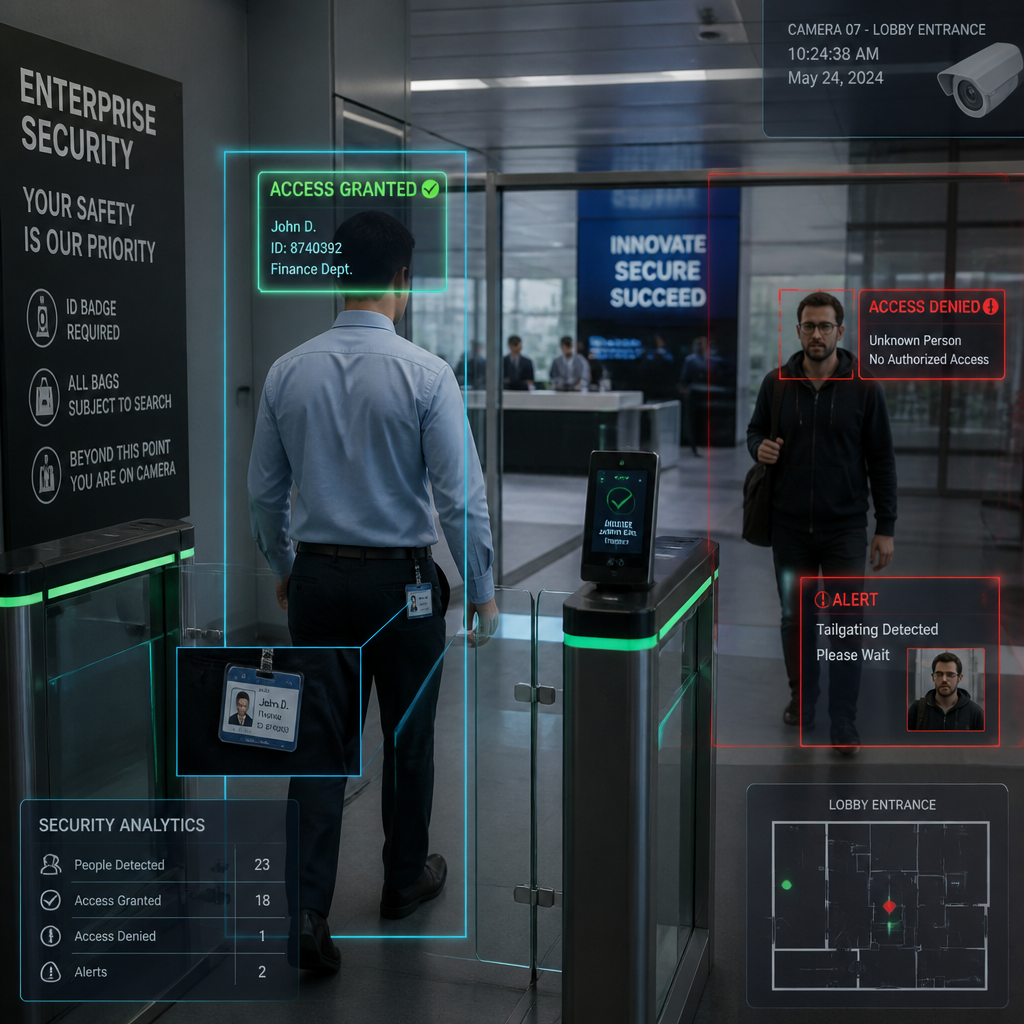
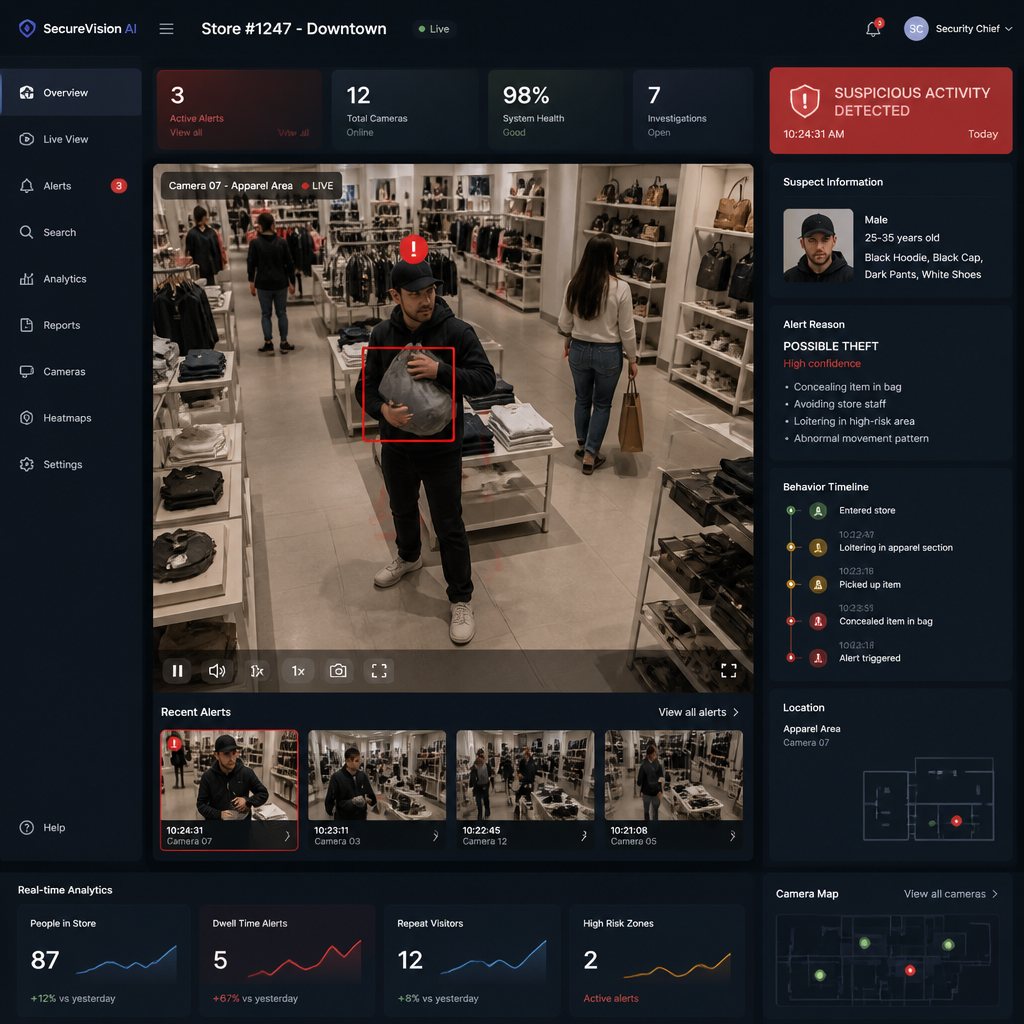
Argu is cctv analytics you build with a sentence: describe the situation that matters, and an agent watches for it around the clock.
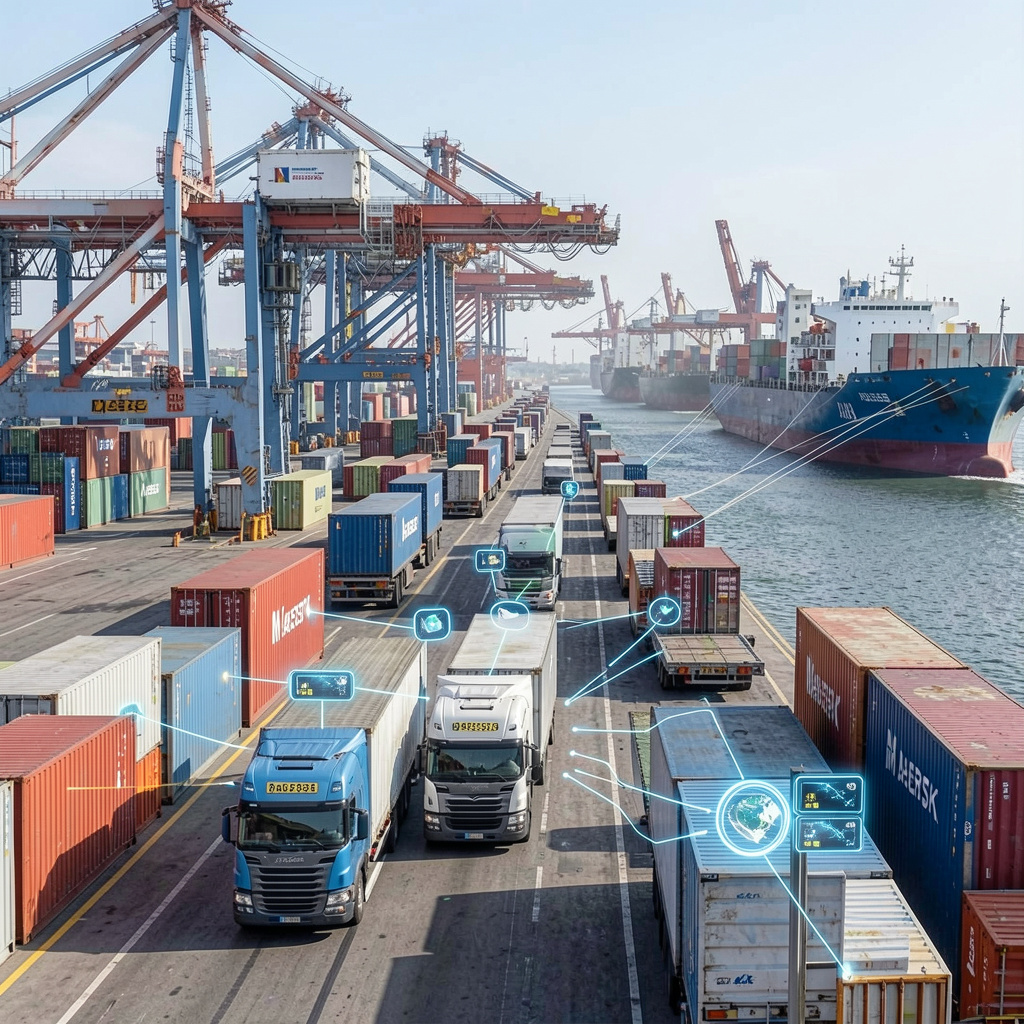
The difference is architecture, not a bigger detector list. The platform combines large language models with visual encoders, so it reads a scene closer to the way a person does: who is present, what they are doing, and whether that matches the rule set for that camera. A competitor's list of forty detection types is a ceiling. Here, the operator writes the forty-first one. Terminal operators run these agents across gate lanes and quay perimeters as part of a wider port security programme.
- A scenario written in plain English becomes a live agent in about 30 seconds, without a developer writing a line of code – the same claim made above for this platform.
- The platform connects to existing RTSP or ONVIF Profile S/T/G streams, IP cameras and NVRs, rather than requiring new detector-specific hardware.
- Camera feeds run at standard 1080p–4K resolution and 15–30 fps, over either H.264 or H.265 compression, the two codecs most gate and perimeter cameras already use.
- Most cameras on a network draw power over IEEE 802.3af (15.4W), 802.3at (30W), or 802.3bt PoE, so a new agent typically does not require new camera-side wiring.
- Argu closed a two million dollar pre-seed round led by Speedrun, the early-stage fund from Andreessen Horowitz, with the Port of Miami and Mekorot investing as customers who run the platform themselves.
- Terminal operators at ports fold these agents into a wider critical-infrastructure posture that can include NDAA Section 889 hardware restrictions at federally connected sites.
The same agent architecture is covered in more depth on Argu's vision agents page, and terminal operators run it as part of the wider port security programme referenced above. Government and critical-infrastructure teams layer it into homeland security surveillance, and teams comparing platforms can see how this differs from a fixed-detector product on Argu's best AI video analytics companies page.
| Axis | Fixed detector catalogue | Argu vision-agent approach |
|---|---|---|
| What raises the alert | A match against one of roughly forty pre-trained detector classes | A scenario described in a sentence by the operator, turned into a live agent in about 30 seconds |
| What a human must watch | Every trigger from the fixed detector list, regardless of relevance to the site | Only the specific scenario written for that camera or zone |
| Integration path | A new engineering ticket or model retraining per use case | Existing RTSP or ONVIF Profile S/T/G streams, IP cameras and NVRs already installed |
| Applicable standards context | The detector list is fixed regardless of site-specific policy | An operator-authored rule can be scoped to a site's own policy, relevant when footage is reviewed under frameworks such as CJIS for law-enforcement users |
| Camera / feed required | Compatible only with cameras the vendor's detector was trained against | Standard 1080p–4K feeds at 15–30 fps over H.264 or H.265, on PoE-powered (IEEE 802.3af/at/bt) cameras already on the network |
| What gets retained | Detection logs tied to fixed categories only | Alerts plus the underlying live and archived footage, searchable by the same natural-language query |