
Intrusion Detection

Argu adds perimeter security that understands distance and depth, flagging a fence violation the moment someone starts to climb, not after they are inside.

The differentiator is spatial perception. Standard motion sensors see pixels change and cannot tell a swaying branch from a person at the fence line. Because this system understands depth and three dimensional boundaries, it holds up at night and in adverse weather, conditions where pixel based motion sensors tend to produce the most nuisance alarms. Remote unmanned sites depend on perimeter agents as the first layer of critical infrastructure security.

Key facts:
  • Distance-to-fence tracking runs on existing RTSP or ONVIF Profile S/T camera streams at 1080p–4K, 15–30 fps.
  • Outdoor camera hardware rated IP66/IK10 continues reading through night, rain and fog.
  • Power and data run over existing 802.3af/802.3at PoE, up to 100m over Cat6, without new poles or trenching.
  • Fence-line video and the distance/behavior read can be retained together on an operator-set 30–90 day window.
  • Perimeter monitoring at utility and maritime facilities maps to the physical-security intent of NERC CIP-014-3/CIP-006 and the ISPS Code, 33 CFR Part 105 and MTSA.

Unmanned and remote sites in homeland security and critical facilities use the same distance tracking as their first line of defense; see how perimeter intrusion detection compares to a fixed sensor, and why the false alarm rate matters more than raw sensitivity.

AxisConventional motion sensorArgu vision-agent approach
What raises the alertAny pixel change in the frameA tracked distance-to-fence reading that crosses into climbing behavior, not raw motion
What a human must watchEvery motion trigger, including wildlife and branchesOnly fence-violation events where climbing behavior is confirmed
Camera hardware neededA motion sensor tuned for daylight pixel contrastExisting RTSP or ONVIF Profile S/T IP cameras and NVRs, 1080p–4K at 15–30 fps, IP66/IK10 rated for outdoor mounting
Applicable regulatory contextNot tied to a specific physical-security standardMaps to the physical-security intent of NERC CIP-014-3/CIP-006 at utilities and the ISPS Code, 33 CFR Part 105 and MTSA at port and maritime facilities
Power and cablingNew poles, trenching, dedicated sensor wiringExisting 802.3af/802.3at PoE camera runs, up to 100m over Cat6
What gets retainedMotion-trigger clips onlyFence-line video plus the distance/behavior read, on an operator-set 30–90 day window

What is Intrusion Detection

Traditional motion sensors treat perimeter security as a pixel change problem: a moving leaf and a climbing intruder can trigger the same nuisance alarm. This system understands spatial depth, tracking how far a person is from the fence line and what they are doing at that distance. As someone approaches, a distance is tracked in real time. As they begin to climb, a fence violation alert fires, rather than waiting for them to already be over the top. Feeds run at 1080p to 4K, 15–30 fps, over existing RTSP or ONVIF Profile S/T streams from IP66/IK10 rated outdoor cameras, and the fence-line record can be retained on an operator-set 30–90 day window.

section over lay 1 line orange

Perimeter intrusion detection with spatial depth

Distance to the fence line is tracked continuously, so the system distinguishes a person approaching from a person already climbing, rather than reacting to any movement equally. Runs on 1080p–4K feeds at 15–30 fps over RTSP or ONVIF Profile S/T.

section over lay 1 line orange

Fence line monitoring in low light and bad weather

Spatial understanding of depth and boundaries holds up at night and in rain or fog, conditions where pixel based motion sensors tend to misfire most often. Camera housings rated IP66/IK10 are built for exactly these outdoor conditions.

section over lay 1 line orange

Fewer nuisance alarms

Because the system understands three dimensional boundaries instead of flat pixel change, wildlife, branches and weather are far less likely to trigger an alert meant for a person. This maps to the physical-security intent behind NERC CIP-014-3/CIP-006 at utility sites.

section over lay 1 line orange

Works with the perimeter cameras already installed

Connects to RTSP streams, IP cameras and NVRs already covering the fence line, adding spatial detection without new poles or cabling. Power runs over existing 802.3af/802.3at PoE, up to 100m over Cat6.

Key Takeaways

These are the core principles that define how Argu approaches every deployment. Our solutions are built to work on your existing infrastructure, require no engineering overhead, and deliver measurable results from day one. Every feature is designed with one goal: giving your team the intelligence to act faster, with more confidence, and without adding complexity.

section over lay 1 line orange

Perimeter Security Based on Distance, Not Just Motion

A distance tag tracks how close a person is to the fence line, so the system can distinguish someone walking nearby from someone about to climb. Camera feeds run at 1080p to 4K, 15–30 fps.

section over lay 1 line orange

Fence Violation Alerts as Climbing Begins

An alert fires as a person begins to climb the fence line, rather than after they have already crossed it. Events are retained on an operator-set 30–90 day window.

section over lay 1 line orange

Holds Up at Night and in Bad Weather

Spatial depth perception keeps working in low light, rain and fog, conditions that typically cause pixel based motion sensors to misfire. IP66/IK10 rated hardware is built for exactly these conditions.

section over lay 1 line orange

Fewer False Alarms From Wildlife and Branches

Understanding three dimensional boundaries means ordinary movement near the fence line is far less likely to be mistaken for an intrusion. Relevant to NERC CIP-014-3/CIP-006 and ISPS Code / 33 CFR Part 105 / MTSA perimeter requirements.

See it in Action

A person approaches the fence line

A distance tag tracks how close they are

A fence violation alert fires as they begin to climb

How It Works

A camera covers the fence line
An existing perimeter camera, already mounted along the boundary, provides the video feed used for spatial detection. at 1080p–4K resolution over RTSP or ONVIF Profile S/T.
Depth and distance are tracked
The system tracks how far a person or object is from the fence line in three dimensions, not just whether a pixel has moved. at 15–30 frames per second.
Behavior at the boundary is assessed
As a person approaches, the system tracks whether they are walking past, standing still or beginning to climb, rather than flagging every movement the same way. against the same distance thresholds every time.
A fence violation alert fires
Once climbing begins, an alert is raised naming the location and the time, while the person is still at the fence rather than already inside. The event is retained on the operator's 30–90 day window.
01
02
03
04

Product Advantages

section over lay 1 line orange

Spatial perception over pixel movement

Understanding depth and three dimensional boundaries lets the system tell a climbing intruder from a swaying branch, something flat motion detection cannot do reliably. at up to 4K resolution.

section over lay 1 line orange

Perimeter intrusion detection that holds up after dark

Night, rain and fog are exactly when pixel based motion sensors produce the most nuisance alarms. Spatial depth tracking keeps working in those same conditions. Housings rated IP66/IK10 are built for exactly these conditions.

section over lay 1 line orange

Fewer alarms security teams have to review

Fence line monitoring that understands boundaries, not just motion, cuts down on the wildlife and weather triggers that waste a guard's attention. Fewer clips means less footage to review across the 30–90 day retention window.

section over lay 1 line orange

Deploys on the fence line cameras already installed

RTSP streams, IP cameras and NVRs already covering the perimeter can be used directly, without new poles, trenching or cabling along the fence. over existing 802.3af/802.3at PoE, up to 100m over Cat6.

Frequently Asked Questions

How is this different from a standard motion sensor for perimeter security?

A standard motion sensor reacts to pixel change and cannot tell a swaying branch from a person at the fence line. This system understands spatial depth and three dimensional boundaries, tracking how far someone is from the fence and what they are doing at that distance, so it flags a climb in progress rather than any movement nearby.

Does perimeter intrusion detection work at night?

Yes. Spatial depth perception is not dependent on daylight pixel contrast the way ordinary motion sensors are, so detection continues to work at night and in adverse weather such as rain or fog. Camera hardware rated IP66/IK10 and feeds at 1080p to 4K, 15–30 fps, support this in practice.

Will this reduce false alarms from wildlife or weather?

That is the intent of fence line monitoring built on spatial understanding rather than flat motion detection. Because the system tracks three dimensional boundaries and distance, ordinary movement near the fence is far less likely to be mistaken for a person climbing.

Do we need new cameras along the perimeter?

No. The system connects to RTSP streams, IP cameras and NVRs already installed along the fence line, adding spatial detection as a software layer rather than requiring new poles or cabling. Power and data can run over existing 802.3af/802.3at PoE, up to 100m over Cat6.

Can perimeter security data stay on site?

Yes. On premise deployment is available for sites that need fence line and perimeter data to stay local rather than sent to an outside cloud, a common requirement for government and critical infrastructure facilities that Argu already serves across four continents.

Does this help meet utility or port physical-security requirements?

It maps to the physical-security intent of NERC CIP-014-3 and CIP-006 at utility sites, and the ISPS Code, 33 CFR Part 105 and MTSA perimeter requirements at port and maritime facilities, though the operator remains responsible for the applicable compliance program.

How long is fence-line video retained?

Fence-line video plus the distance and behavior read can be retained together for a 30–90 day window set by the operator's own policy, and an on-premise deployment keeps that data on site.

Can AI video analytics detect loitering and unusual behavior near a perimeter?

A site can describe the behaviour it cares about in plain language, for example a person staying near a fence line, and Argu turns that sentence into a live agent in about thirty seconds. For climbing and approach it tracks distance and depth to the fence line, so a fence violation alert fires as someone starts to climb. It runs on the perimeter cameras already installed over RTSP or ONVIF Profile S/T at 1080p to 4K and 15 to 30 fps.

Related Products in This Industry

Casino gaming floor with card tables, players and ceiling cameras

Casino surveillance that answers the question the floor actually has, because an investigator describes the behaviour instead of choosing a preset alert.

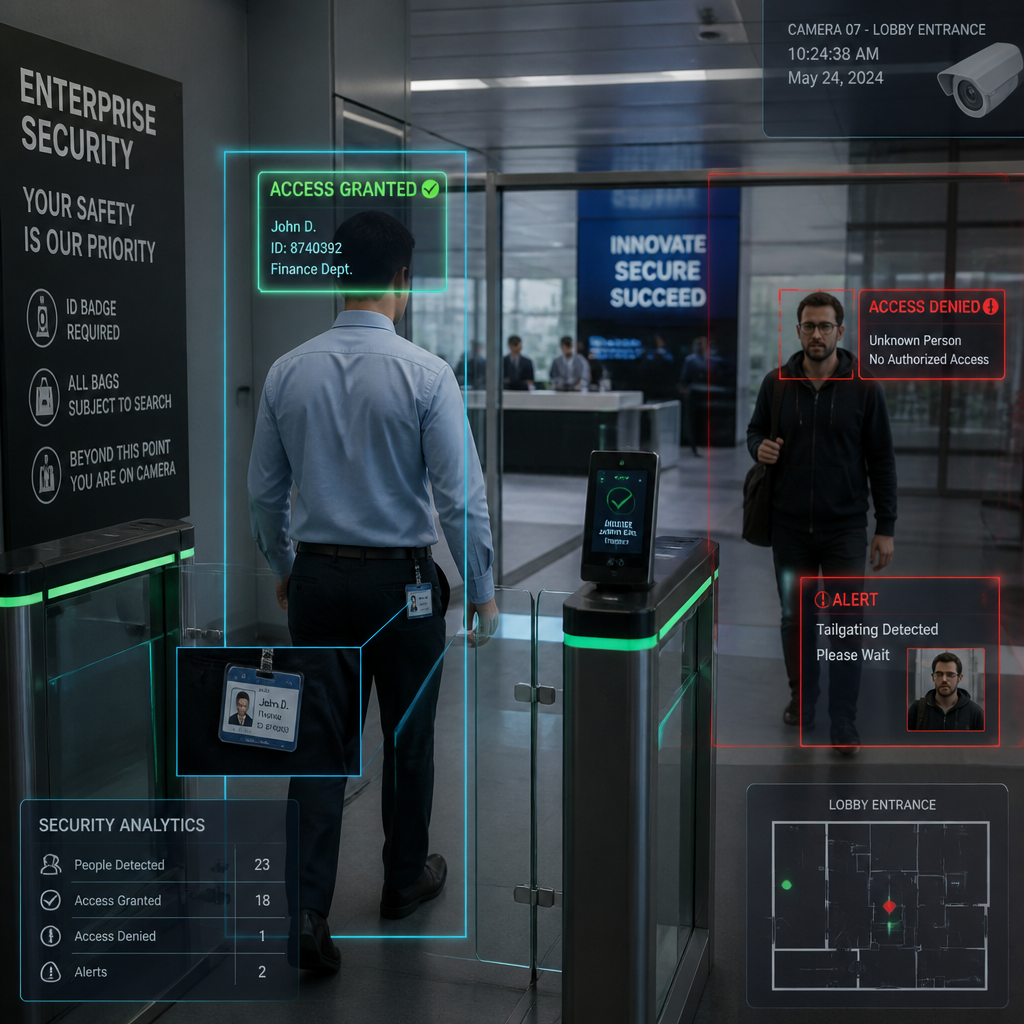
Visitors passing a turnstile access gate in a glass-fronted office lobby

Among access control companies, Argu is the layer that makes badge readers and turnstiles you already own enforce policy, not just open a door.

Container truck driving under a camera gantry at a port gate

Container OCR that reads a container ID, the truck plate underneath it, and the vessel name in one pass, so one camera covers what three checks used to.

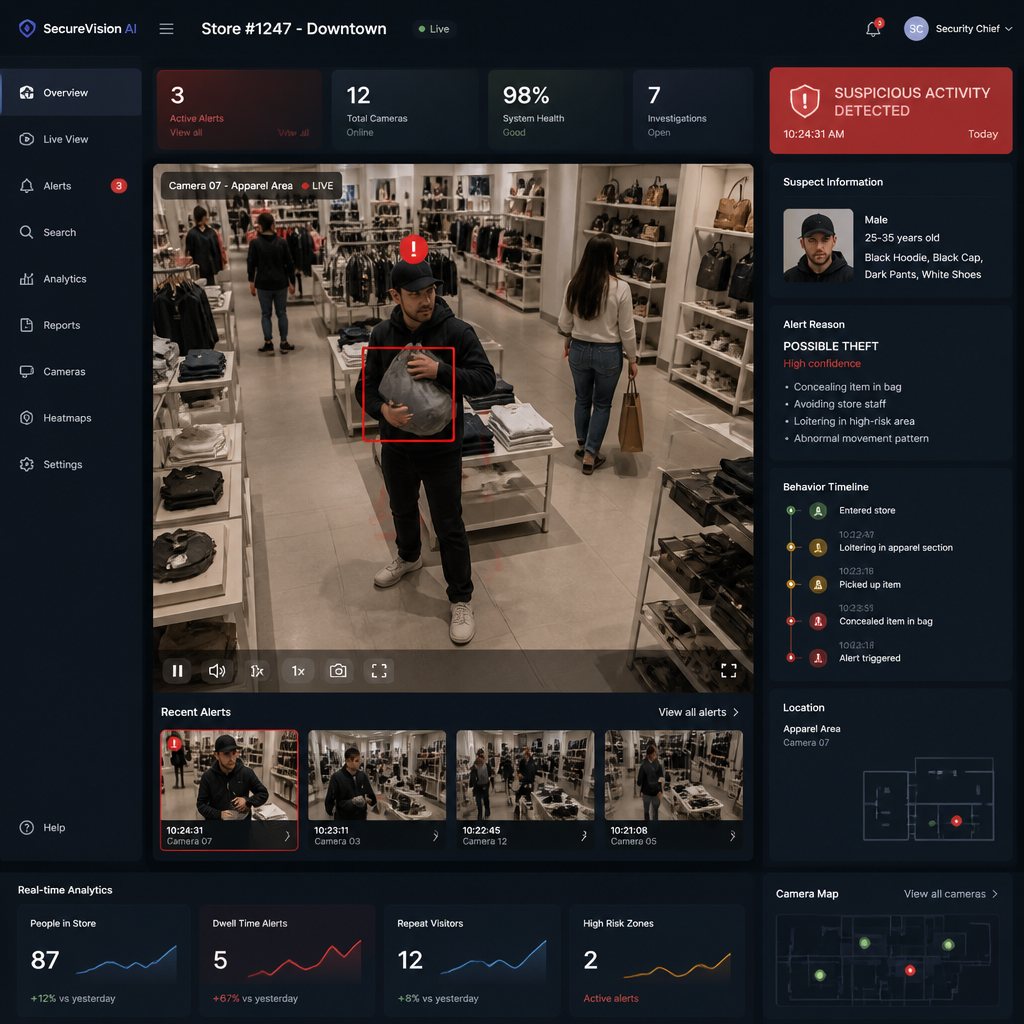
Retail security dashboard flagging a concealed item alert in a store

Argu AI gives loss prevention retail teams a way to catch concealment the moment it happens, not weeks later in a stock count.

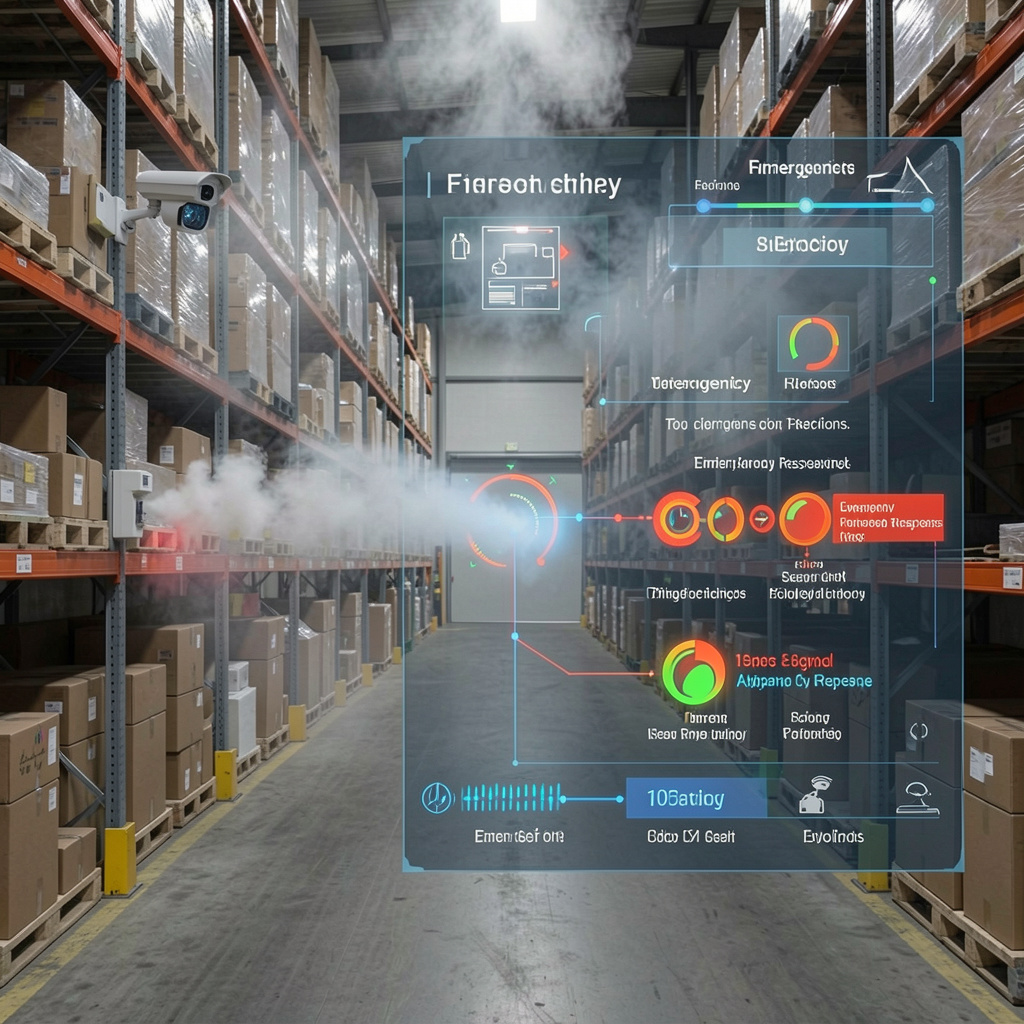
Warehouse aisle with a ceiling camera and smoke rising from a pallet

AI fire detection that spots a smoke plume anywhere in a warehouse or yard, not only in the small radius a ceiling sensor can reach.

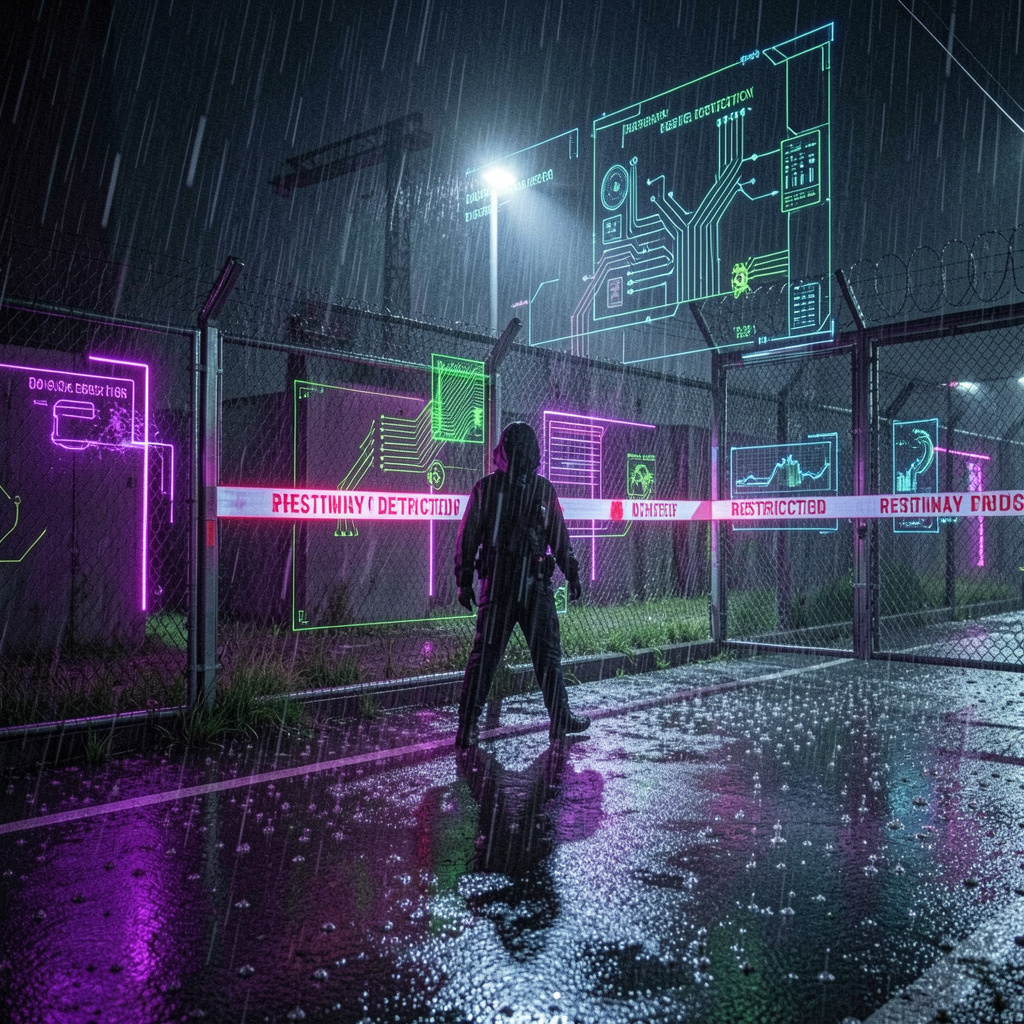
Perimeter fence at night with a person climbing it under floodlights

Argu adds perimeter security that understands distance and depth, flagging a fence violation the moment someone starts to climb, not after they are inside.

Related reading

Monitor & Secure your perimeter today!

Schedule a demo to see the AI agent run on your own footage.

Get a Custom Demo

See how the agent performs on your specific environment.

Portrait of a smiling woman in a gray blazer seated by a window
Portrait of a man in a dark suit with folded arms
Portrait of a man with glasses in a dark blazer

Join world-class security teams

By submitting this form, you agree to our Privacy Policy. Your data is encrypted.

Seamless Integration With