
People Counting

Argu AI is people counting software that counts whatever you describe, not just bodies through a doorway, using cameras you already have.

The differentiator is that counting rules are written, not configured. There is no dedicated stereo sensor to mount over each entrance and no fixed definition of what a person is. A rule can treat a group as one visit, filter by what someone is wearing, or count vehicles instead of people, all from the same camera feed already installed at the entrance. Counting feeds the same retail video analytics reporting that operations teams already review each week.

Key facts:
  • Occupancy analytics run on existing RTSP or ONVIF Profile S camera streams at 1080p–4K, 15–30 fps — no dedicated overhead sensor.
  • A new counting rule can be described in plain language and go live in about 30 seconds, per Argu's published agent-creation time.
  • Real-time occupancy counts can be checked directly against a facility's NFPA 101 occupant load limit.
  • Attribute-based or individual-level counting queries fall under GDPR Article 15 where personal data is involved.
  • Counting-rule records can be retained on an operator-set 30–90 day window.

The same feed powers occupancy analytics for smart city deployments as well as single-site venues.

AxisConventional overhead counterArgu vision-agent approach
What raises the alertA fixed body-crossing-a-line count onlyAn occupancy or group count matching a plain-language rule, including attribute filters
What a human must watchA single aggregate number with no contextCurrent occupancy plus the specific counting rule's matches, updated in real time
Rule setupVendor reconfiguration or new hardware for each new count typeA new rule described in plain language, live in about 30 seconds
Applicable standardNot tied to a specific life-safety figureReal-time occupancy can be checked against the facility's NFPA 101 occupant load limit
Camera / feed requiredA dedicated overhead stereo sensor per entranceExisting RTSP or ONVIF Profile S streams, IP cameras and NVRs at 1080p–4K, 15–30 fps
What gets retainedAggregate counts onlyCounting-rule records retained on an operator-set 30–90 day window; GDPR Article 15 governs individual-level queries

What is People Counting

Traditional people counting software needs a dedicated sensor mounted over every door and counts one thing: bodies crossing a line. Argu works differently. A family of three can be counted as one unit if that is the real number needed. A query like how many people wearing red hats entered, or how many buses with a specific ad passed by, gets answered directly, and everything else is ignored. Feeds run at 1080p to 4K, 15–30 fps, over RTSP or ONVIF Profile S, and a live occupancy count can be checked directly against the facility's NFPA 101 occupant load limit, with records retained on an operator-set 30–90 day window.

section over lay 1 line orange

Plain Language Counting Rules

A rule is written in ordinary sentences, such as counting a family group as one unit, instead of configured through a fixed counting menu. A new rule goes live in about 30 seconds, per Argu's published agent-creation time.

section over lay 1 line orange

Attribute Based Counting

Counts can be filtered by what is visible, such as people wearing a certain color or vehicles carrying a specific ad, and everything else is ignored. Individual-level attribute queries fall under GDPR Article 15 where personal data is involved.

section over lay 1 line orange

Occupancy Analytics on Existing Cameras

Entry, exit, and current occupancy are tracked from RTSP or IP camera feeds already installed, without a dedicated overhead sensor. Runs at 1080p–4K resolution, 15–30 fps, and can be checked against the facility's NFPA 101 occupant load limit.

section over lay 1 line orange

No Pre Labeling Required

A new counting rule does not require retraining a model or labeling footage before it can run. Records can be retained on an operator-set 30–90 day window.

Key Takeaways

These are the core principles that define how Argu approaches every deployment. Our solutions are built to work on your existing infrastructure, require no engineering overhead, and deliver measurable results from day one. Every feature is designed with one goal: giving your team the intelligence to act faster, with more confidence, and without adding complexity.

section over lay 1 line orange

People Counting Software That Takes Instructions

A counting rule is described in plain language rather than picked from a fixed list of predefined counts. A new rule goes live in about 30 seconds.

section over lay 1 line orange

Groups Can Count as One Unit

A family or group can be treated as a single entry if that reflects the real footfall counting a venue needs. Feeds run at 1080p to 4K, 15–30 fps.

section over lay 1 line orange

Filters by Attribute, Not Just Presence

A query can count only people wearing a certain item, or vehicles with a specific marking, and skip everything else. Individual-level filters fall under GDPR Article 15.

section over lay 1 line orange

No Dedicated Hardware

Occupancy analytics run on the cameras already installed at each entrance, without a separate overhead counting sensor. Live occupancy can be checked against the NFPA 101 occupant load limit.

See it in Action

A family of three counted as one unit

Attribute filter applied to the same camera feed

Occupancy updates in real time at the entrance

How It Works

Describe the count
An operator writes the counting rule in plain language, including any grouping or attribute filter that matters. No dataset collection or model training is required first.
The agent goes live
The written rule becomes a working counting agent on the connected entrance and lobby cameras. typically in about 30 seconds.
Entries and exits are tracked continuously
Occupancy analytics update in real time as people or vehicles matching the rule move through the space. at 15–30 frames per second over the existing feed.
Counts are available on demand
Current occupancy and historical footfall counting figures can be reviewed whenever they are needed. Records are retained on the operator's 30–90 day window.
01
02
03
04

Product Advantages

section over lay 1 line orange

Counts What You Need

A group can be one unit and an attribute can be a filter, so the number reported matches the question being asked, not a generic body count. and checked live against the NFPA 101 occupant load limit.

section over lay 1 line orange

No Overhead Sensor Installation

Occupancy analytics run on existing RTSP, IP camera, and NVR feeds, so there is no separate stereo counter to mount and wire at each door. at 1080p–4K resolution, 15–30 fps.

section over lay 1 line orange

Rules Change Without Reconfiguration

A new counting rule is a new sentence, not a new hardware install or a retrained model. A new rule takes about 30 seconds to configure.

section over lay 1 line orange

Works Across Entrances and Lobbies

The same approach to footfall counting applies to a single entrance or every connected camera across a site. with records retained on an operator-set 30–90 day window.

Frequently Asked Questions

How is this different from typical people counting software?

Most people counting software needs a dedicated sensor over each door and counts bodies crossing a line. This system runs on cameras already installed and follows a rule written in plain language, including how to group people or filter by what is visible.

Can it count a family or group as a single visit?

Yes. A rule can treat a family of three, or any defined group, as one unit rather than three separate counts, if that better reflects the footfall counting a venue needs.

Can it count something other than people?

Yes. A rule can count vehicles carrying a specific marking, or filter by an attribute such as clothing color, and ignore everything that does not match.

Do we need new hardware at our entrances?

No. Occupancy analytics run on RTSP streams, standard IP cameras, and NVR setups already in place, so there is no separate overhead sensor to install. Feeds run at 1080p to 4K resolution, 15–30 fps.

How is a new counting rule set up?

A new rule is written in plain language, describing what to count and how to group it, and goes live on the connected cameras without retraining a model or labeling footage first. A rule set up this way typically goes live in about 30 seconds.

Can occupancy counts be checked against a fire-code limit?

Yes. Real-time occupancy can be checked directly against a facility's NFPA 101 occupant load limit, since the same live count already tracks entries and exits.

How long are counting records retained?

Counting-rule records can be retained on an operator-set 30–90 day window, and where a rule filters on individual-level attributes, GDPR Article 15 governs a person's right to request what was recorded.

What is the best AI people counting software for stores and venues using existing cameras?

The best fit is software that reads the cameras you already own instead of needing a sensor over every door. Argu AI is people counting software built that way: it connects to existing RTSP or ONVIF Profile S camera streams at 1080p to 4K and 15 to 30 frames per second, and a counting rule is written in plain language and goes live in about 30 seconds. A group can be counted as one visit, and a live occupancy count can be checked against a venue occupant load limit. When you compare options, ask each vendor whether it needs dedicated hardware at every entrance, how it handles groups, and how long it retains counting records.

Related Products in This Industry

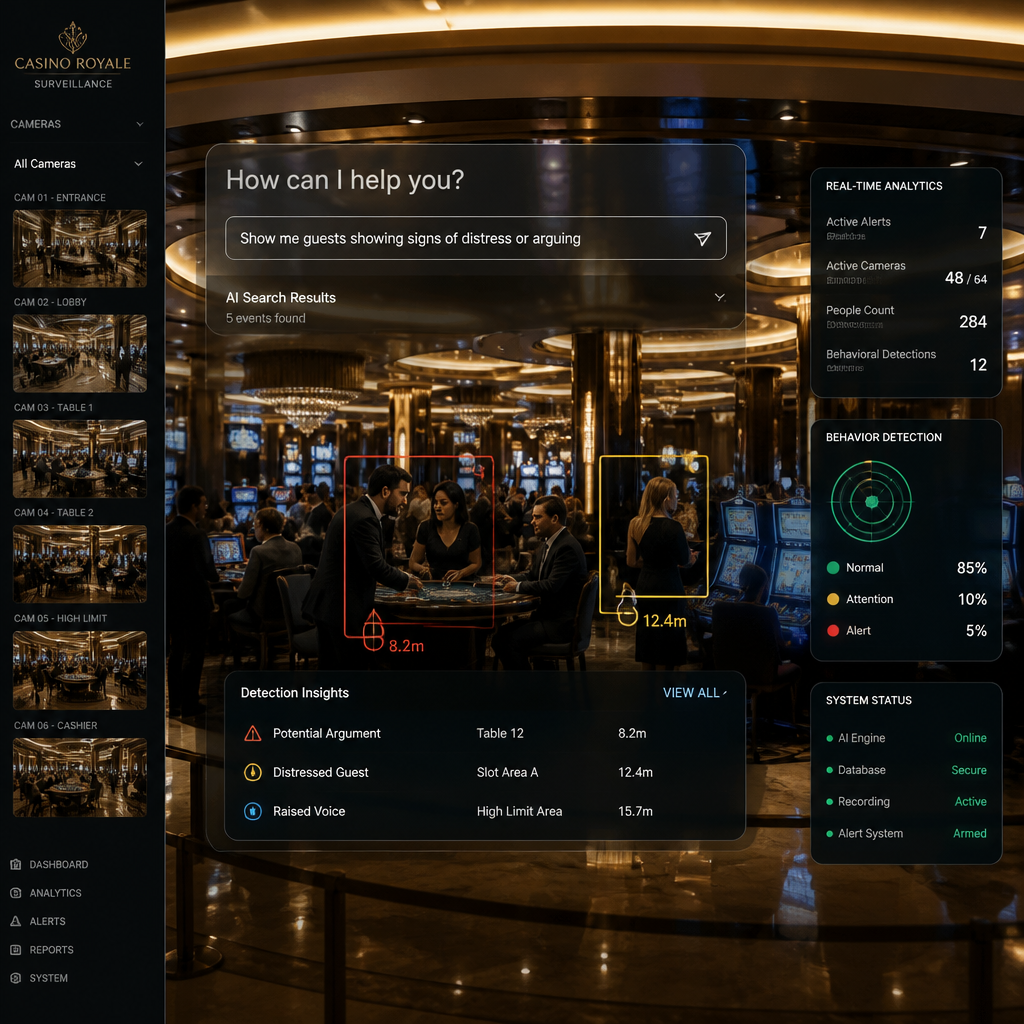
Casino gaming floor with card tables, players and ceiling cameras

Casino surveillance that answers the question the floor actually has, because an investigator describes the behaviour instead of choosing a preset alert.

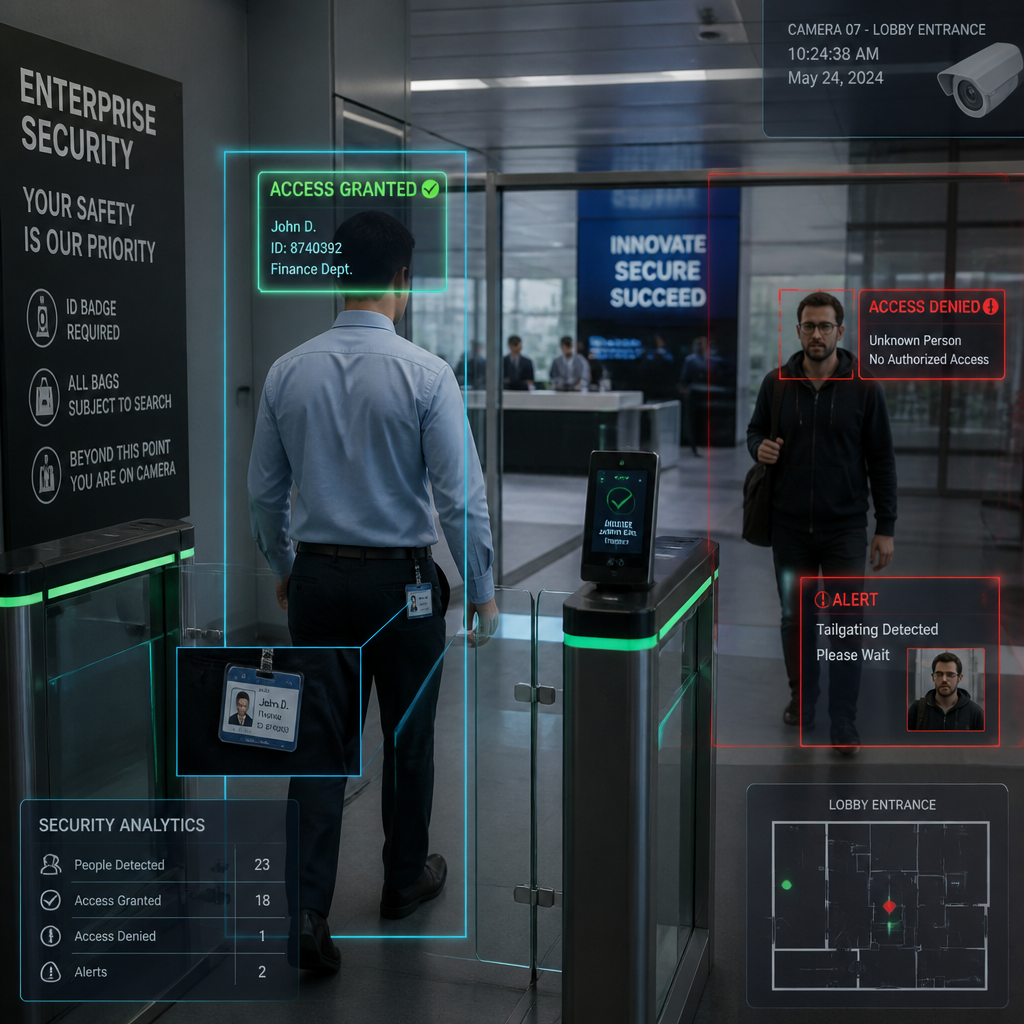
Visitors passing a turnstile access gate in a glass-fronted office lobby

Among access control companies, Argu is the layer that makes badge readers and turnstiles you already own enforce policy, not just open a door.

Container truck driving under a camera gantry at a port gate

Container OCR that reads a container ID, the truck plate underneath it, and the vessel name in one pass, so one camera covers what three checks used to.

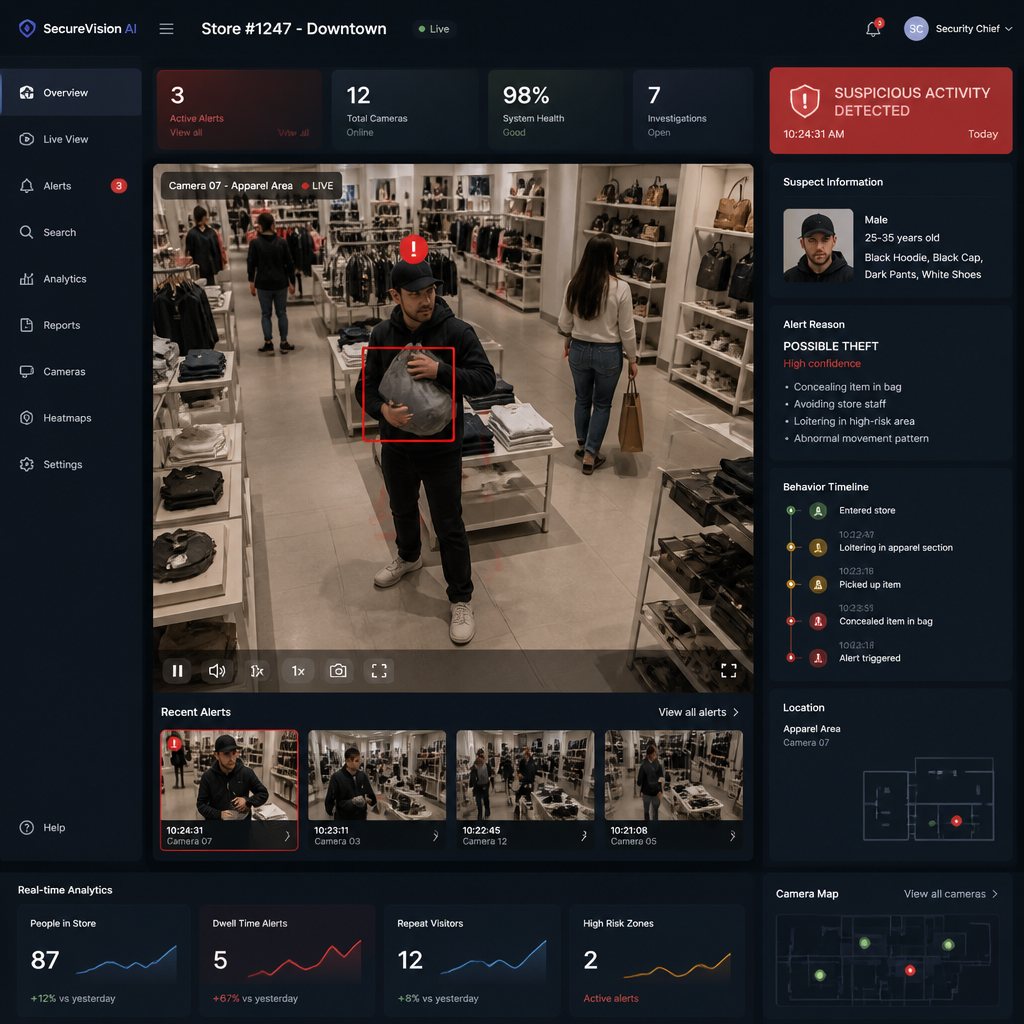
Retail security dashboard flagging a concealed item alert in a store

Argu AI gives loss prevention retail teams a way to catch concealment the moment it happens, not weeks later in a stock count.

Warehouse aisle with a ceiling camera and smoke rising from a pallet

AI fire detection that spots a smoke plume anywhere in a warehouse or yard, not only in the small radius a ceiling sensor can reach.

Perimeter fence at night with a person climbing it under floodlights

Argu adds perimeter security that understands distance and depth, flagging a fence violation the moment someone starts to climb, not after they are inside.

Related reading

Monitor & Secure your perimeter today!

Schedule a demo to see the AI agent run on your own footage.

Get a Custom Demo

See how the agent performs on your specific environment.

Portrait of a smiling woman in a gray blazer seated by a window
Portrait of a man in a dark suit with folded arms
Portrait of a man with glasses in a dark blazer

Join world-class security teams

By submitting this form, you agree to our Privacy Policy. Your data is encrypted.

Seamless Integration With