
LPR Cameras

Argu's anpr reads more than the plate: vehicle color, make and fleet logo are captured in the same pass, across every camera on the perimeter.

The differentiator is context beyond the string of characters. A plate reading of 'partially obscured' or 'out of state' is common at a busy gate. Capturing the vehicle color, the make and a visible fleet logo in the same frame gives a second and third way to confirm identity when the plate alone is not enough. Municipal teams pair plate reading with junction and bus lane monitoring under smart city surveillance.

Key facts:
  • Reads existing 1080p–4K camera feeds at 15–30 fps over RTSP or ONVIF Profile S — no dedicated ANPR camera is required.
  • Vehicle color, make and a visible fleet logo are captured in the same frame as the plate read.
  • Plate and vehicle-context evidence can be retained together for a 30–90 day window set by the operator's own policy, not a fixed federal schedule.
  • On-premise deployment keeps plate and vehicle data on site, relevant at NDAA Section 889–restricted federal and port facilities.
  • Runs over standard H.264/H.265 encoded streams and existing 802.3af/802.3at powered IP cameras, with no new camera hardware at the lane.

Ports and terminal operators pair plate reads with port security workflows, while municipal and campus car parks use the same feed for parking lot surveillance.

AxisConventional plate-only readerArgu vision-agent approach
What raises the alertPlate string match only; an unreadable or partial plate produces no alertPlate plus vehicle color, make and a visible fleet logo combined; a partially obscured plate can still produce an alert
Camera / feed requiredDedicated ANPR camera per laneExisting RTSP or ONVIF Profile S streams, IP cameras and NVRs already installed, at 1080p–4K and 15–30 fps
Cross-gate identityEach lane logs a separate, disconnected readOne tracked vehicle identity correlated across every gate on the same feed set
What gets retainedPlate number and timestamp onlyPlate, color, make and fleet-logo match evidence retained together for the same operator-set 30–90 day window
Applicable compliance contextNot specific to any standardOn-premise deployment available for NDAA Section 889–restricted sites; vehicle/container ID conventions align with ISO 6346 numbering at port gates
Integration pathNew dedicated hardware install at each laneConnects to existing RTSP/ONVIF Profile S streams, IP cameras and NVRs over 802.3af/802.3at PoE

What is LPR Cameras

Most license plate recognition tools stop at the plate string: a number, a timestamp, and little else. This anpr platform reads the whole vehicle in the same pass. Color, make and a visible fleet logo are captured alongside the plate, so a partial or dirty plate does not end vehicle identification. Multiple camera views tag the same vehicle as authorized or as an alert, correlated across every gate it passes through. The underlying feeds run at 1080p to 4K resolution, 15–30 fps, over RTSP or ONVIF Profile S, and plate data plus the color, make and logo match can be retained on an operator-set 30–90 day window rather than a fixed federal schedule. See what is ANPR for how the term compares with license plate recognition.

section over lay 1 line orange

License plate recognition with vehicle context

The plate is read alongside color, make and a visible fleet logo, so identification does not depend on the plate alone being clean and fully visible. Feeds run at 1080p–4K resolution and 15–30 fps.

section over lay 1 line orange

Anpr across multiple camera views

The same vehicle can be tracked as it passes several gates or lanes, with each camera contributing to one identity instead of producing separate, disconnected reads. Each existing RTSP or ONVIF Profile S stream contributes to the same tracked identity.

section over lay 1 line orange

Authorized and alert tagging

Vehicles are tagged against an authorized list in real time, so security sees a flagged vehicle at the moment it approaches, not in a report reviewed later. Each match or mismatch is logged against the authorized list on every read, not a periodic batch job.

section over lay 1 line orange

Runs on existing perimeter cameras

Connects to RTSP streams, IP cameras and NVRs already installed at the gate, without requiring a dedicated anpr camera at every lane. Compatible with existing 802.3af/802.3at powered IP cameras and NVRs over standard RTSP and ONVIF Profile S.

Key Takeaways

These are the core principles that define how Argu approaches every deployment. Our solutions are built to work on your existing infrastructure, require no engineering overhead, and deliver measurable results from day one. Every feature is designed with one goal: giving your team the intelligence to act faster, with more confidence, and without adding complexity.

section over lay 1 line orange

Anpr Plus Vehicle Identification

The plate, the vehicle color, the make and a visible fleet logo are captured together, so one obscured character does not stop identification. Feeds run at 1080p to 4K, 15–30 fps.

section over lay 1 line orange

Multi Camera Vehicle Tracking

A vehicle can be followed across several gates or lanes as one tracked identity, rather than as separate reads from separate cameras. Correlation spans every RTSP or ONVIF Profile S camera connected to the same site.

section over lay 1 line orange

Real Time Authorized or Alert Tagging

Each vehicle is checked against the authorized list the moment it is read, and an alert fires immediately for anything that does not match. Tagging runs against the authorized list on every read, not a periodic batch job.

section over lay 1 line orange

No Dedicated Anpr Hardware Required

The system runs on RTSP streams, IP cameras and NVRs already installed at the perimeter, rather than requiring a new camera built specifically for plate reading. No new hardware: existing 802.3af/802.3at powered IP cameras and NVRs are reused.

See it in Action

Plate, color and make captured in one pass

A visible fleet logo adds a second identifier

Matched against the authorized list at the gate

How It Works

A vehicle approaches the gate
An existing perimeter camera captures the vehicle as it enters the read zone, the same camera already covering that lane. over the existing RTSP or ONVIF Profile S stream, at the camera's native 1080p–4K resolution.
The plate and the vehicle are read together
The system reads the plate string while simultaneously capturing color, make and a visible fleet logo in the same frame. capturing 15–30 frames per second in the same pass.
The vehicle is matched against the authorized list
The combined read, plate plus vehicle details, is checked against the list of authorized vehicles for that gate. against the authorized list held on premise.
An alert or a clear pass is logged
A match produces a routine log entry. A mismatch, or no plate read at all, produces an alert naming the gate, the time and what was captured. Plate and vehicle-context evidence is retained together for the operator's 30–90 day window.
01
02
03
04

Product Advantages

section over lay 1 line orange

More than a plate string

Color, make and a visible fleet logo travel with the plate read, so a partially obscured or muddy plate still leaves useful identification data. Color and make read at up to 4K resolution.

section over lay 1 line orange

One identity across many gates

Multiple camera views tag the same vehicle consistently as it moves through the site, instead of treating each lane as a separate, disconnected system. across every ONVIF Profile S or RTSP camera on the site.

section over lay 1 line orange

Existing cameras, not a new lane build

RTSP streams, IP cameras and NVRs already installed at the perimeter can be used, avoiding a dedicated anpr camera install at every gate. avoiding new 802.3af/802.3at PoE camera installs at each lane.

section over lay 1 line orange

On premise deployment

Vehicle and plate data can stay on site with an on premise deployment, which matters for facilities that restrict where that data can be sent. a relevant option at NDAA Section 889–restricted facilities.

Frequently Asked Questions

What is the difference between anpr and license plate recognition?

Anpr, short for automatic number plate recognition, and license plate recognition describe the same core function: reading a vehicle plate automatically from camera footage. Anpr is the term used more often outside North America, while license plate recognition is the common phrase in the United States.

Does this only read the plate?

No. The plate is read alongside vehicle color, make and a visible fleet logo captured in the same frame, so identification does not rely on the plate alone being clean and fully visible. Feeds run at 1080p to 4K resolution, 15–30 fps, over RTSP or ONVIF Profile S.

Can it track a vehicle across multiple gates?

Yes. Multiple camera views tag the same vehicle consistently as it moves through different lanes or entry points, correlating the reads into one tracked vehicle instead of separate, unconnected events.

Do we need a dedicated anpr camera?

No. The system connects to RTSP streams, IP cameras and NVRs already installed at the perimeter. A dedicated plate reading camera is not required at every lane. Any existing 802.3af or 802.3at powered IP camera or NVR on the perimeter can be used.

Can this run on premise for a sensitive site?

Yes. On premise deployment keeps vehicle and plate data on site rather than sending it to an outside cloud, which matters for government and critical infrastructure sites. Argu's technology already runs this way for operators across four continents.

What resolution and frame rate does the ANPR read need?

The read works on 1080p to 4K feeds captured at 15–30 fps, encoded in H.264 or H.265, which covers most IP cameras already installed at a gate or lane.

Can plate and vehicle data be retained on site for a fixed period?

Yes. Plate, color, make and fleet-logo match evidence can be retained together for a 30–90 day window set by the operator's own policy, and an on-premise deployment keeps that data on site rather than in an outside cloud — relevant for NDAA Section 889–restricted federal and port facilities.

Related Products in This Industry

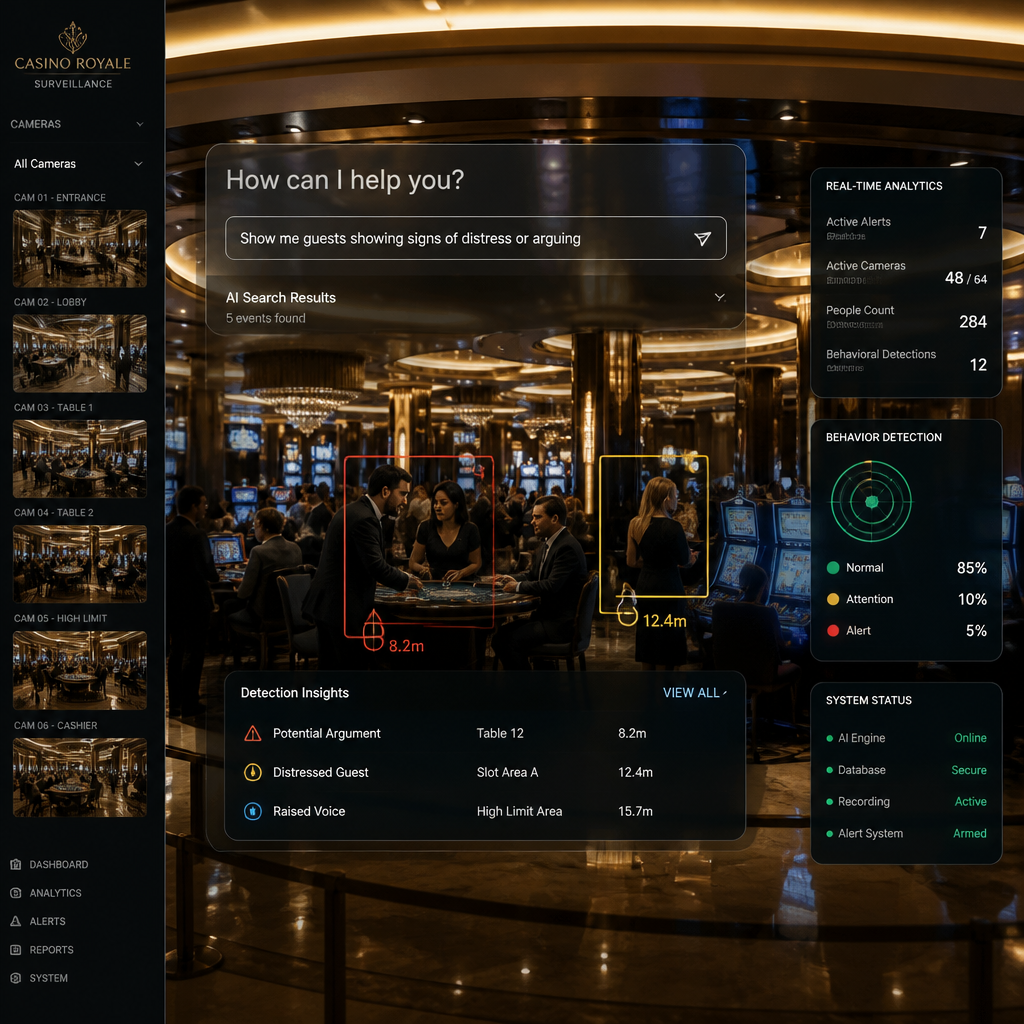
Casino gaming floor with card tables, players and ceiling cameras

Casino surveillance that answers the question the floor actually has, because an investigator describes the behaviour instead of choosing a preset alert.

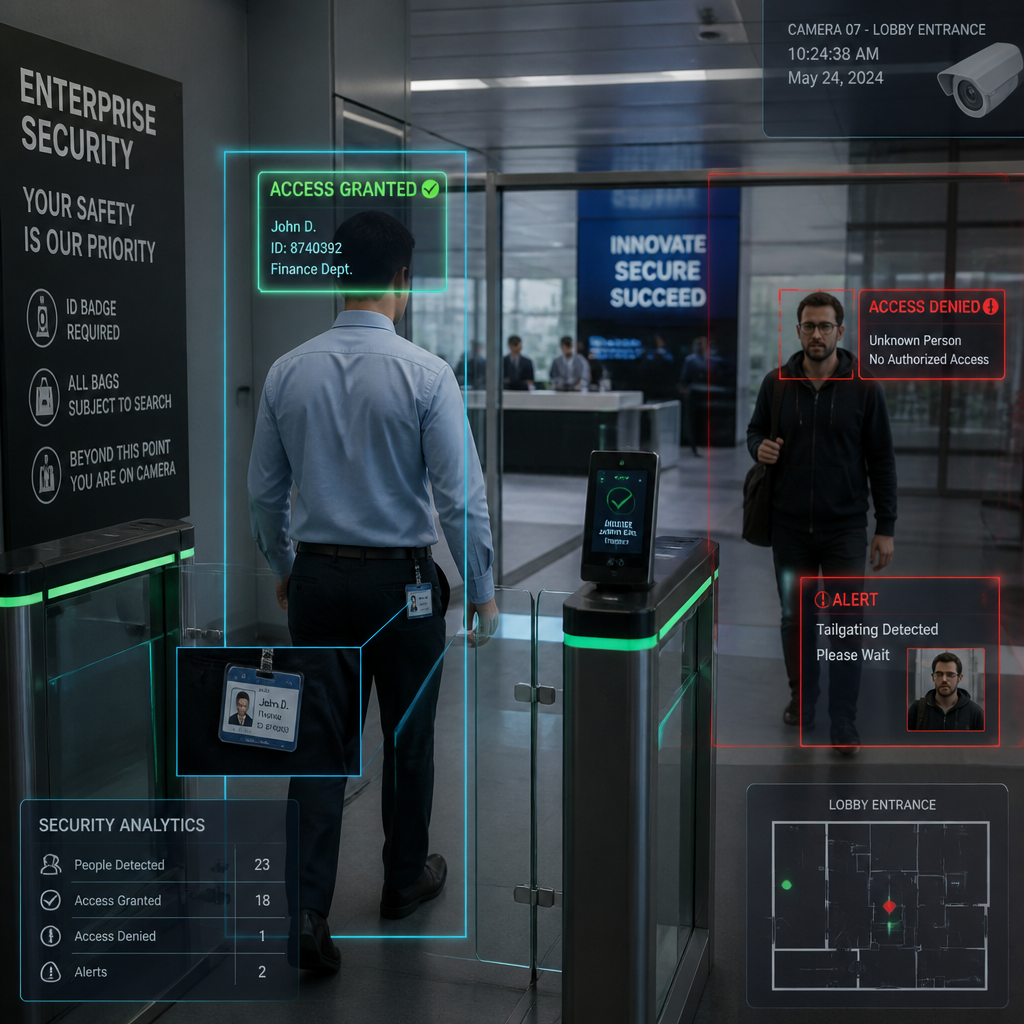
Visitors passing a turnstile access gate in a glass-fronted office lobby

Among access control companies, Argu is the layer that makes badge readers and turnstiles you already own enforce policy, not just open a door.

Container truck driving under a camera gantry at a port gate

Container OCR that reads a container ID, the truck plate underneath it, and the vessel name in one pass, so one camera covers what three checks used to.

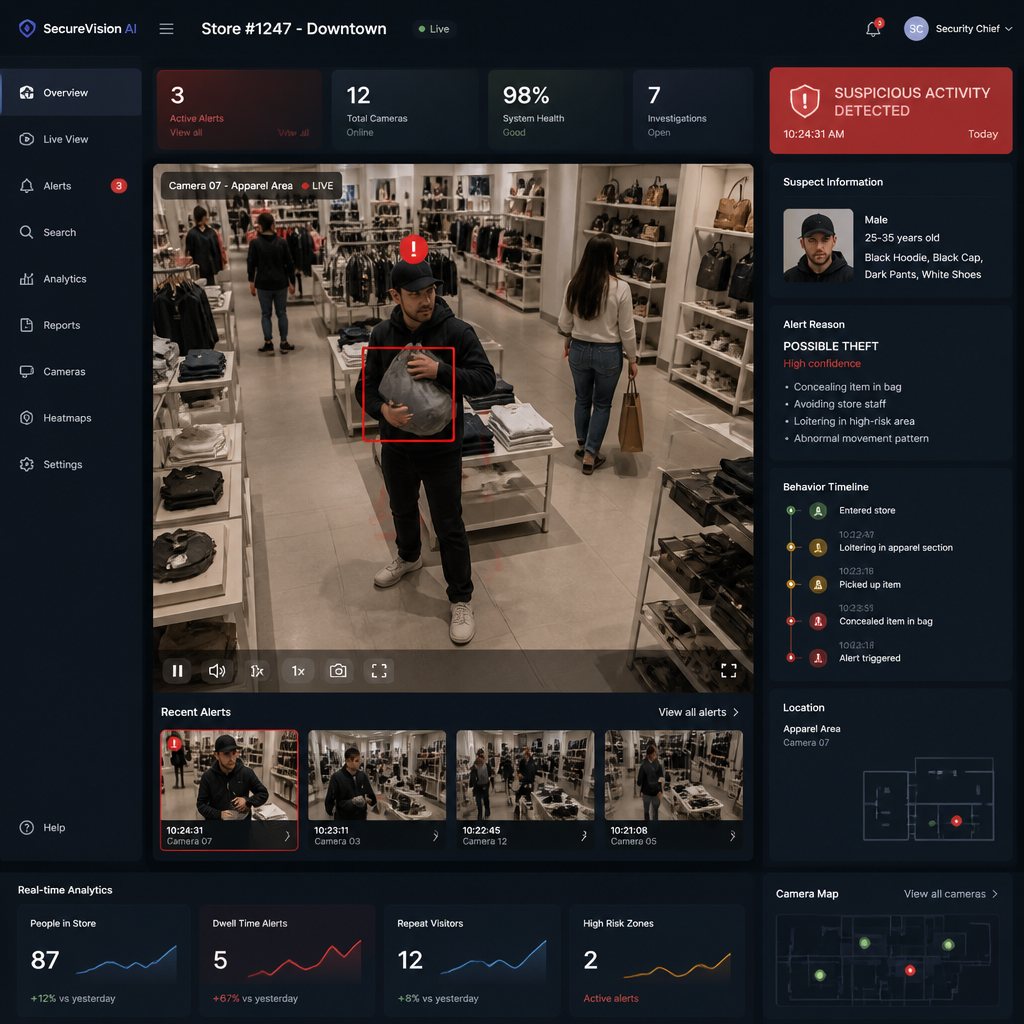
Retail security dashboard flagging a concealed item alert in a store

Argu AI gives loss prevention retail teams a way to catch concealment the moment it happens, not weeks later in a stock count.

Warehouse aisle with a ceiling camera and smoke rising from a pallet

AI fire detection that spots a smoke plume anywhere in a warehouse or yard, not only in the small radius a ceiling sensor can reach.

Perimeter fence at night with a person climbing it under floodlights

Argu adds perimeter security that understands distance and depth, flagging a fence violation the moment someone starts to climb, not after they are inside.

Related reading

Monitor & Secure your perimeter today!

Schedule a demo to see the AI agent run on your own footage.

Get a Custom Demo

See how the agent performs on your specific environment.

Portrait of a smiling woman in a gray blazer seated by a window
Portrait of a man in a dark suit with folded arms
Portrait of a man with glasses in a dark blazer

Join world-class security teams

By submitting this form, you agree to our Privacy Policy. Your data is encrypted.

Seamless Integration With