
Home » Argu Products » Facial Recognition
Facial Recognition
Facial recognition security deployed on premise, so biometric matching happens on your own infrastructure and identity data never has to leave the site.
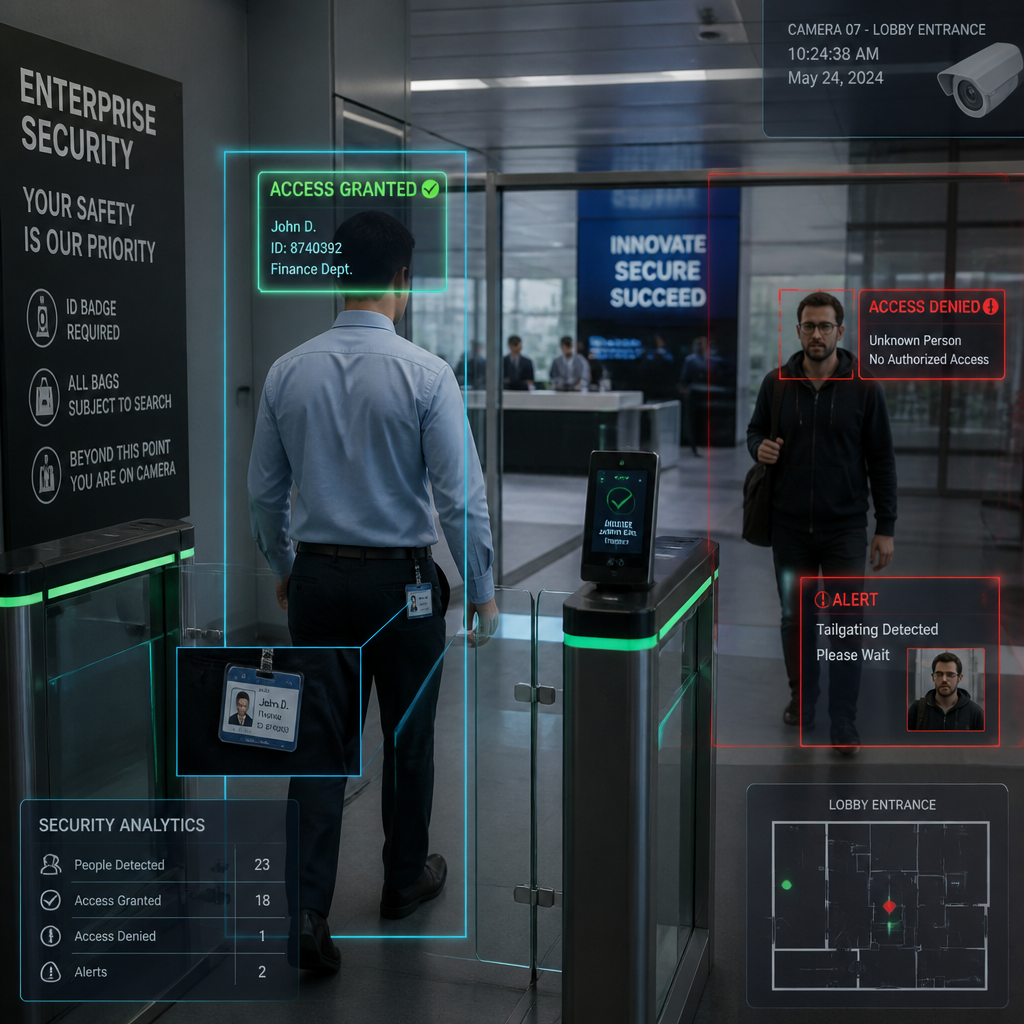
The differentiator is where the data lives and how the capability is used. Facial recognition is optional, switched on only where a site needs it, and built into the same agent workflow as every other capability rather than sold as a standalone biometric silo. Deployment is on premise, so biometric matching happens on infrastructure the customer controls, configured to local privacy and access law. Confirming identity at a controlled entrance is one piece of a broader homeland security surveillance posture.
- Both 1:1 verification and 1:many identification run from the same on-premise deployment, consistent with the intent of GDPR Article 4's definition of biometric data as a distinct, sensitive category.
- On-premise processing keeps identity data on infrastructure the customer controls, relevant at sites already restricted under NDAA Section 889 or using FIPS 201/PIV identity credentials.
- The capability pairs with existing gate hardware over RTSP, ONVIF Profile S/T, IP camera, and NVR connections, without a dedicated biometric reader.
- Matching runs on standard camera feeds at 1080p–4K resolution and 15–30 fps, the same range used across Argu's other vision-agent capabilities.
- In US jurisdictions, biometric identifiers fall under statutes such as Illinois BIPA (740 ILCS 14) and CCPA, both of which set consent and disclosure requirements independent of Argu's own deployment.
- A GDPR Article 35 data protection impact assessment is the standard compliance step for biometric processing in EU jurisdictions, and on-premise deployment is configured to support that review rather than bypass it.
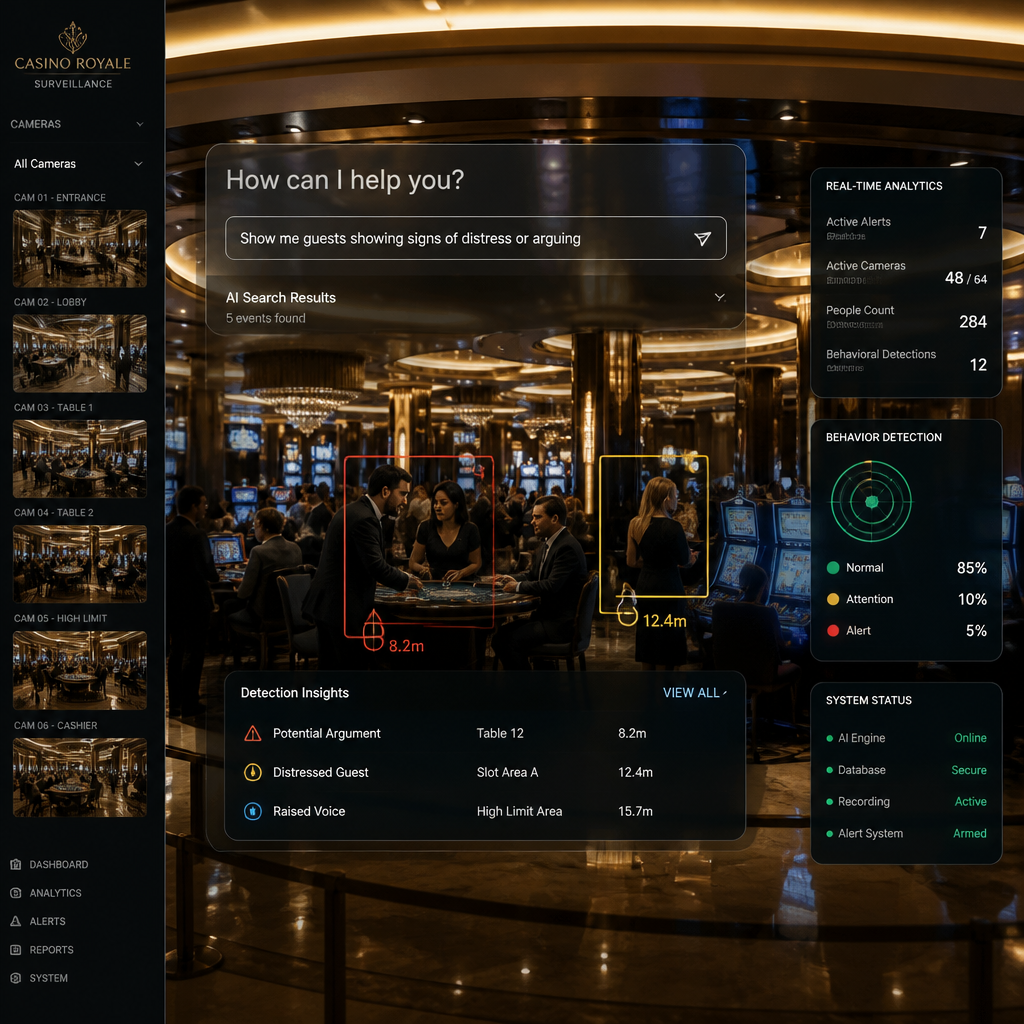
Facial recognition folds into the same homeland security surveillance posture referenced above, and casino operators run it as one layer inside a wider casino surveillance program. At the gate it pairs with tailgating detection and access control monitoring, and sites already running video redaction apply the same on-premise privacy posture to both capabilities.
| Axis | Conventional cloud biometric silo | Argu on-premise vision-agent approach |
|---|---|---|
| What raises the alert | A 1:1 or 1:many match returned by an external vendor's API | A match confirmed on infrastructure the customer controls, inside the same agent workflow as every other capability |
| What a human must watch | A separate biometric dashboard, apart from the main surveillance feed | One alert stream alongside every other Argu capability at the site |
| Integration path | New biometric-specific hardware or a cloud API contract | Existing RTSP, ONVIF Profile S/T, IP camera, and NVR connections already in place |
| Applicable standards context | Biometric data leaves the site, subject to a third-party processor's own terms | Consistent with the intent of GDPR Article 35's biometric impact-assessment requirement and Illinois BIPA (740 ILCS 14) consent provisions, since data does not leave the facility |
| Camera / feed required | A dedicated biometric-grade camera at the reader point | Standard 1080p–4K feeds at 15–30 fps from cameras already mounted at the gate |
| What gets retained | Match logs on a third-party server | On-premise identity records retained per the facility's own privacy and access-control policy |