

Ports
Port security teams use Argu at gate lanes, quay cranes and yard stacks, reading container IDs and plates in one pass. The Port of Miami is both an investor and a customer.
Port security teams use Argu at gate lanes, quay cranes and yard stacks, reading container IDs and plates in one pass. The Port of Miami is both an investor and a customer.
Explore real-world AI monitoring scenarios tailored to this industry.


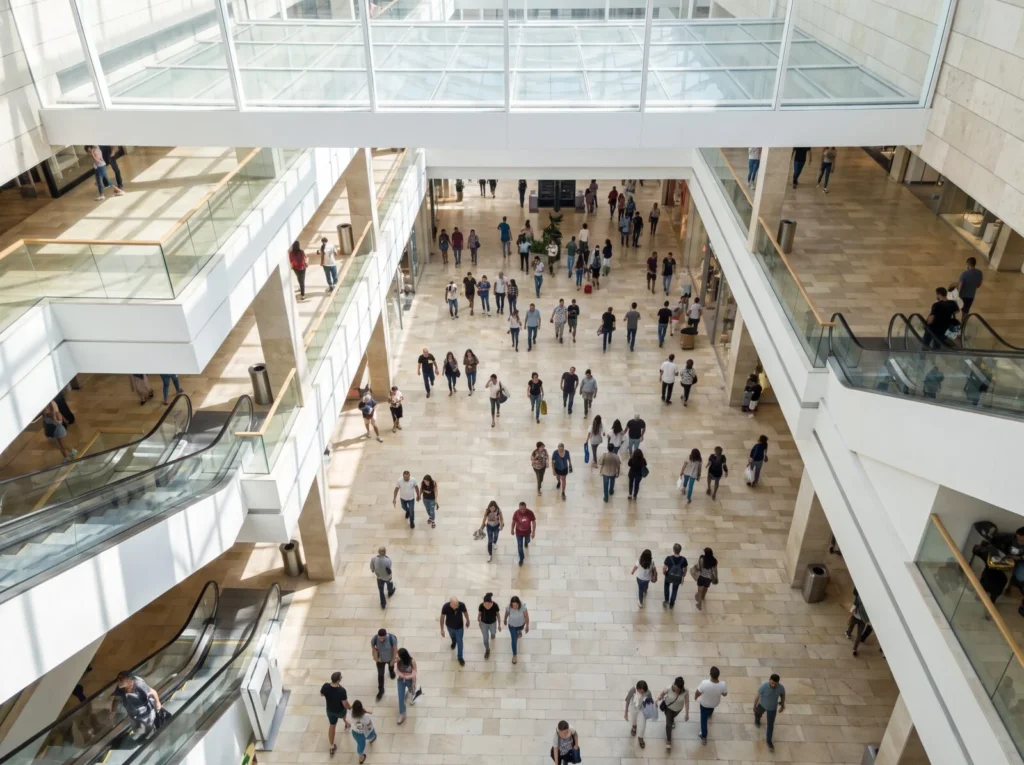

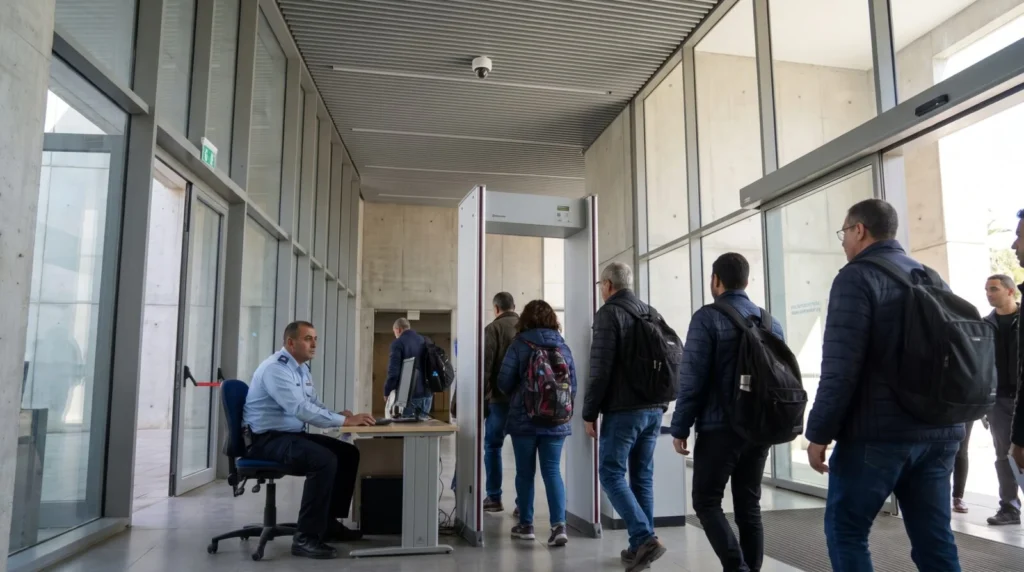

Port security is the set of controls, at the gate, the fence line, the quay and the yard, that separate legitimate cargo, vehicle and personnel movement from the movement that should never have been allowed through.
Port security covers four zones with different risk: the landside gate where trucks enter and exit, the perimeter fence around the terminal, the waterside edge where vessels berth, and the yard where containers are staged. A terminal security director owns all four at once, and each produces routine traffic that must move without slowing the port down. Gate identity checks and OCR for ports, which reads container IDs, plates and vessel names in one pass, carry most of that daily load.
The gate is the highest value control point in a terminal: it is the one place every truck, driver and container is forced to identify itself before reaching the yard. Every pass has to reconcile three separate identifiers — container ID, truck plate and driver credential — against the booking record, and driver checks increasingly run through TWIC, the credential mandated under the Maritime Transportation Security Act of 2002 for unescorted access to a secure terminal area. A weak gate creates a paperwork gap too, since disputes over container condition, missing drivers and mismatched plates usually trace back to something the gate should have caught.
A gate lane confirms three things on every pass: container ID against the manifest, truck plate against the booking, and driver against the credential on file. Reading a plate reliably at lane speed is a job for automatic number plate recognition (ANPR), the same underlying technology behind Argu’s LPR cameras. Doing this by eye, lane after lane, all shift, produces fatigue and missed mismatches. Reading all three in one camera pass is what keeps a gate lane moving at the pace a terminal needs.
A terminal’s landside perimeter is the fence line and access roads facing the surrounding city. Its waterside perimeter is the berth line and quay edge facing open water. Outdoor cameras covering both are typically rated IP66 or higher, the ingress-protection class built for continuous exposure to salt air and weather at the waterline. The two zones need different attention: landside intrusion looks like a vehicle or person near a fence at an odd hour, while waterside risk looks like unscheduled vessel or small craft activity near a berth.
Ports work under a zoning logic close to the International Ship and Port Facility Security Code, which separates a facility into general terminal grounds, restricted areas tied to active cargo operations, and areas with the highest security requirement, such as a berth during a vessel call. The Code defines three security levels — 1, 2 and 3 — and each escalation raises who is allowed into a zone and how closely they are checked on the way in. The practical result is a short list of zones, each with a different allowed population and a different consequence for someone who should not be there.
| Control Point | What It Protects | Traditional Control | What Monitoring Needs to Catch |
|---|---|---|---|
| Gate lanes | Container, truck and driver identity | Guard checkpoint, RFID or photo ID | A container ID, plate or driver that does not match the booking |
| Landside perimeter | Fence line and access roads | Fencing, lighting, patrol routes | A vehicle or person near the fence outside normal hours |
| Waterside perimeter | Berth line and quay edge | Harbor patrol, vessel tracking | Small craft or unattended activity near a berth off schedule |
| Restricted operational zones | Active lifting and cargo operations | Badge access, signage | Personnel without required PPE or credentials in a live zone |
| Yard and stacking areas | Container inventory and dwell | Manual tally, after the fact review | A container moved, opened or accessed outside the plan |
Yard and quay monitoring is where port security and terminal operations overlap most: the same camera feed that watches for an unauthorized person in a stack also produces the dwell time and throughput data operations already tracks. A container that sits longer than planned is both an operational flag and a security one, and flagging it means cross-checking three records that already exist for other reasons — the booking, the gate-in scan and the yard placement — before it becomes a security escalation rather than a routine delay.
A container that dwells past its expected window deserves a second look, the same way a car parked too long in a restricted lot does. The explanation is usually mundane, a delayed truck or a paperwork hold, but it is also the pattern that can precede tampering, and flagging it as it happens closes that window while it is still open.
Motion based alerting fails at a terminal because a terminal never stops moving. Thousands of legitimate container moves, truck passes and personnel movements happen in a single day, and a system that alerts on motion alone either floods the control room with noise or gets tuned down until it misses what actually matters. Most terminal camera networks already run at 15–30 fps, more than enough resolution in time for behavior-based analysis — the limiting factor is judgment, not frame rate. A terminal needs a way to describe the specific situation that counts as unusual for that zone and hour, instead of absorbing the false alarm rate that comes with alerting on motion alone.
Ports are treated as critical infrastructure, falling within the Transportation Systems Sector, one of the 16 critical infrastructure sectors CISA coordinates security policy across — the same designation covered in our broader look at critical infrastructure security. That status is why security purchasing at a terminal runs through procurement rules a retail deployment never touches, including NDAA compliant hardware requirements under Section 889, plus the facility security plans required under 33 CFR Part 105 for MTSA-regulated terminals. The strongest reference in the sector sits here too: the Port of Miami is both an investor in Argu and a customer, a different relationship than a case study, a terminal that backed the approach with its own money before it put the system on its own gates.
Argu approaches a terminal’s gate, perimeter and yard the same way: the security director describes what matters, a truck plate that does not match a booking, a person in a restricted lifting zone without required PPE, a vehicle loitering along a fence line covered by perimeter intrusion detection, and an agent built from it is live on the existing camera feed in about thirty seconds, with no dataset and no engineer required. Gate access control and the rest of the terminal’s camera investment stay exactly where they are. For the full picture of how this comes together at a terminal, see the agentic port: physical AI for ports. For a walkthrough on your own gate lanes, contact Argu.
Last updated: September 2026
The gate is generally the most important control point, because it is where every truck, container and driver has to identify itself before entering the yard. A gate lane has to reconcile three separate identifiers on every pass — container ID, truck plate and driver credential — against the booking, and driver checks increasingly run through TWIC, the credential required under the Maritime Transportation Security Act of 2002 for unescorted access to a secure terminal area. Landside and waterside perimeters matter too, but the gate is where mismatches are cheapest to catch.
Landside security covers the fence line, access roads and gates that face the surrounding city, while waterside security covers the berth line and quay edge that face open water. The two produce different anomaly patterns: a landside issue usually looks like a vehicle or person near a fence at an odd hour, while a waterside issue usually looks like unscheduled vessel or small craft activity near a berth. Both fall under the ISPS Code's three security levels, and both are covered by facility security plans required under 33 CFR Part 105 at MTSA-regulated U.S. terminals.
A container that sits longer than expected can simply reflect a delayed truck or a paperwork hold, but it is also the pattern that can precede tampering or an unauthorized handoff. Flagging a dwell anomaly means cross-checking three records that already exist for other reasons — the booking, the gate-in scan and the yard placement — rather than reconciling it at the end of a shift. This is why yard monitoring increasingly serves both the operations team and the security team from the same camera feed.
A terminal generates thousands of legitimate movements every day, containers, trucks and personnel, so a system that alerts on motion alone either overwhelms the control room or gets tuned down until it misses what actually matters. What a terminal needs is the ability to describe the specific situation that counts as unusual for a given zone and time, rather than treating every movement the same way. That distinction is what separates useful alerting from a high false alarm rate at this scale.
Yes. Ports are treated as critical infrastructure, falling within the Transportation Systems Sector, one of the 16 critical infrastructure sectors CISA coordinates on, and security purchasing at a terminal typically has to meet procurement requirements that a standard commercial deployment does not, including NDAA Section 889 hardware compliance. A vendor unable to answer procurement questions directly is usually not a workable option for a terminal, regardless of the product itself.
TWIC (Transportation Worker Identification Credential) is the federally issued credential required under the Maritime Transportation Security Act of 2002 for unescorted access to secure areas of MTSA-regulated port facilities. Every driver presenting one at a gate lane still has to be matched against the booking and the vehicle in front of a camera, which is why gate identity checks pair TWIC verification with container, plate and driver matching in a single pass rather than treating the credential alone as proof of authorization.


By submitting this form, you agree to our Privacy Policy. Your data is encrypted.